The Kirpan Murder Case: When One Crime Becomes a Community’s Burden
By Aadrita Nandi on June 23, 2026
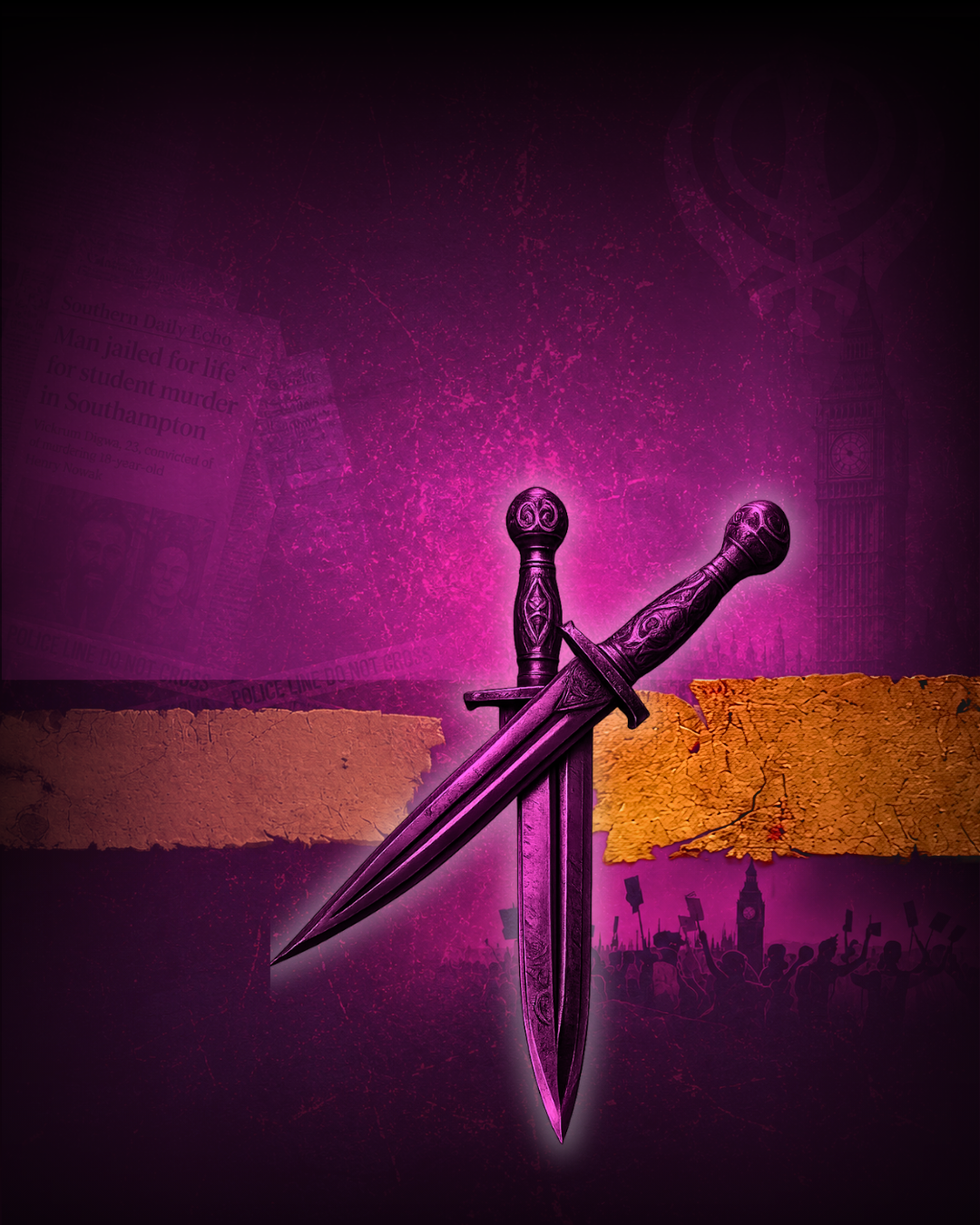
In May 2026, 23-year-old Vickrum Digwa was convicted of murdering Henry Nowak, an 18
year old university student, following an altercation in Southampton, England. During the
trial, Digwa claimed he had acted in self-defence after being racially abused and attacked.
The jury rejected that account and found him guilty of murder. Yet the case did not end with
the verdict.
Instead, it sparked a national debate involving religion, race, policing, immigration, and a
ceremonial Sikh blade known as the kirpan. The murder trial soon evolved into a discussion
about an entire religious community.
Bodycam footage released following the trial showed Nowak lying on the ground telling
officers, “I’ve been stabbed” and “I can’t breathe.” Officers initially treated him as a suspect
after Digwa falsely claimed he had been racially attacked. Nowak was handcuffed while
suffering from fatal injuries and died shortly afterwards. Hampshire Police later apologised to
the family, while an investigation into the officers actions was launched.
The footage triggered outrage across Britain. It even led to parliamentary discussions and
much of that was centred towards the weapon Digwa used. And to understand why, it is
important to understand what a kirpan actually is.
For Sikhs, the kirpan is not simply a knife. It is a religious article of faith that symbolises a
commitment to justice, courage, and the protection of the vulnerable. In countries such as the
United Kingdom, Canada, and India, legal exemptions often allow Sikhs to carry kirpans
despite restrictions on bladed objects. These exemptions exist as an attempt to balance public
safety with religious freedom.
Yet following the Southampton case, the distinction between a religious symbol and a
criminal act became blurry in public discussion.
According to court proceedings, Digwa was already carrying a smaller kirpan that fulfilled
his religious obligation. Prosecutors argued that he also chose to carry a much larger blade,
which was used in the attack. Sikh groups said that this weapon should not be treated as
representative of Sikh religious practice. And as criticism intensified, Sikh leaders moved
quickly to condemn the murder.
In a joint statement, 11 Sikh Members of Parliament stated that the case was “not about
Sikhism, but about a man carrying an offensive weapon and committing a brutal murder.”
“We’ve worn kirpans for hundreds of years,” Sikh educator Amandeep Singh told The
Guardian while discussing fears of growing hostility toward Sikhs. Another community
leader, Kuldeep Singh Deol, stated: “This isn’t representative of the Sikh community. This
was one man.”
In the days following the conviction, Sikh organisations reported a rise in hostility directed
towards Sikh communities across the UK. According to Sky News, a Sikh priest was verbally
abused while shopping and told to “go back to your country.” Community members reported
increasing anxiety, particularly among elderly and vulnerable Sikhs. One community
representative remarked, “I’ve never experienced this level of resentment.”
Public suspicion, however, appeared to spread much further and this pattern is not unique to
Sikhs.
Past terrorist attacks carried out by extremist groups claiming to act in “the name of Islam”,
Muslim communities have frequently faced waves of suspicion and discrimination. After the
September 11 attacks in the United States, Sikhs themselves became targets of hate crimes
because many Americans mistakenly associated their turbans with terrorism. Jewish
communities have also experienced a rise in violent incidents following the Israel-Palestine
conflict even if they are not a supporter or have no connection to those events whatsoever.
What we notice here is a pattern, an individual or a group commits an act and the entire
community has to absorb the consequences.
Social media often accelerates this process. Complex legal cases are designed with catchy
headlines and sharp opinions to provoke outrage. Before many people have read court
documents or official statements, they have often already formed their opinions. And most of
the time, the identity of the criminal becomes more important than the facts of the crime, and
that is what makes the Southampton case significant.
For Henry Nowak’s family, this case is about the loss of a young life, and for many Sikhs it
has also become a reminder of how quickly a single incident can shape perceptions of
millions of people who had nothing to do with it. If a murderer should be punished is not the
most difficult question in the Southampton murder case, it’s whether the societies are capable
of limiting that punishment to the person who actually committed the crime.