Alakh Pandey and The Sensationalisation of Education
By Shaayon Chakravarty on April 5, 2026
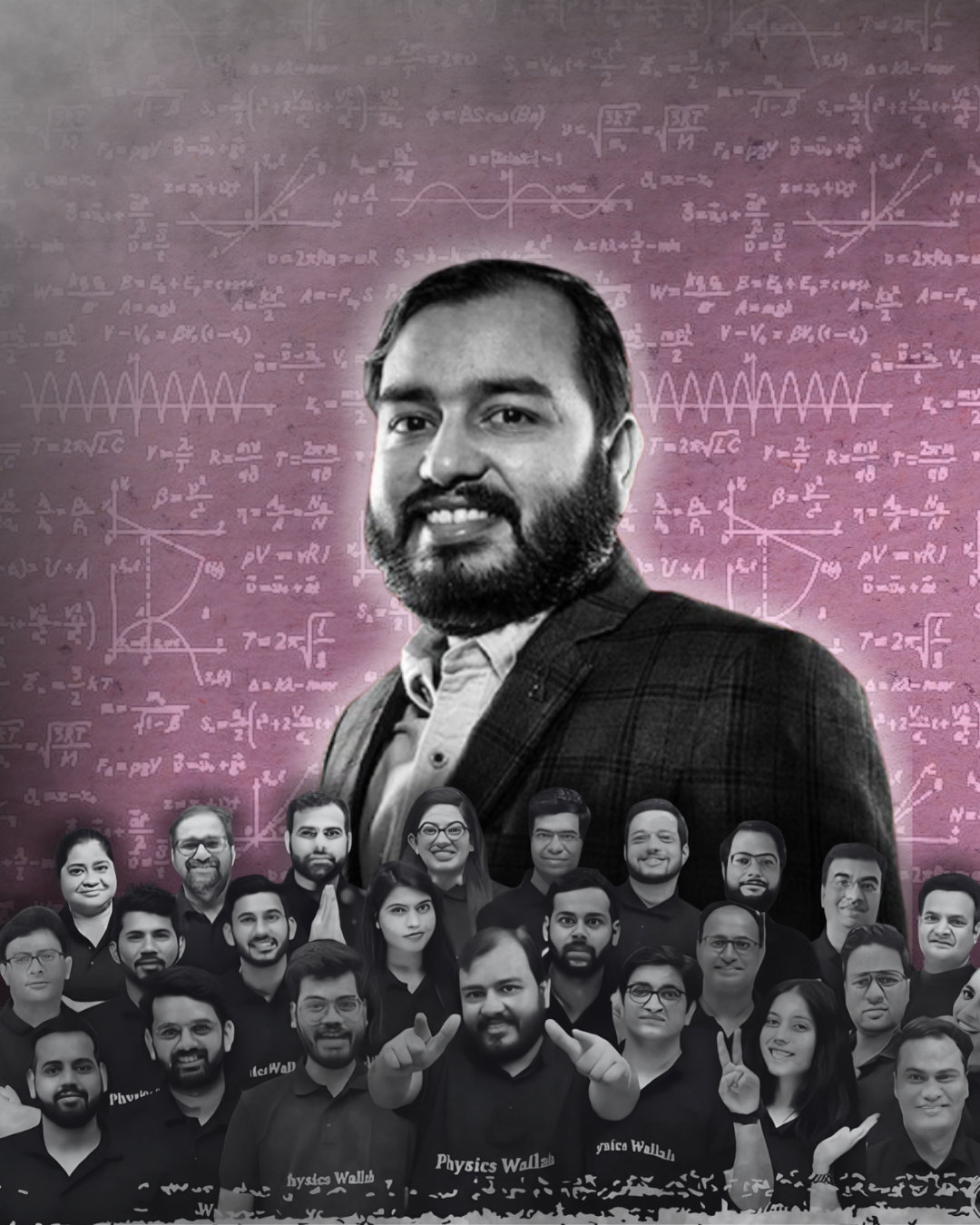
“Education is not a luxury, it is a birthright!” proclaims a taller, more muscular, and slightly less bald version of Alakh Pandey in the trailer for his upcoming biopic, Hello Bachhon. This philosophy was the driving force behind the ed-tech revolution in India, which saw a myriad of online education portals emerge, offering free education through YouTube, along with paid courses that were still comparatively cheaper than physical tuition. This was seen as a breath of fresh air in a system so plagued by exploitative companies looking to get every last paisa out of students hoping to crack their competitive examinations.
The Covid-19 pandemic greatly accelerated this revolution, and now, more than half a decade on, the industry is oversaturated with numerous companies targeting everything from LKG to JEE. As it becomes harder to find a USP for your company in such a highly competitive environment, these online coaching institutes have found a peculiar method of retaining their students: by turning their teachers into celebrities. They pose themselves as great Gurus who hold the key to their success in life, if you would just attend every session and do everything exactly as they say. They are relatable, funny, interactive, and claim to be the only ones who can guide you to victory in whatever rat race you are currently a part of.
You cannot talk about this phenomenon without mentioning the poster boy of the entire industry, Mr PhysicsWallah himself, Alakh Pandey. He is undoubtedly the blueprint that all online coaching institutions follow, being the most successful and having the most organic growth in the industry. He started off making videos covering the physics curriculum of JEE around a decade ago. His videos were informative and easy to understand, and the man himself had an infectious personality, making learning interesting for once. PhysicsWallah launched its app in 2020 to an overwhelming response; no one had seen such cheap pricing for competitive exam coaching before.
As PhysicsWallah grew, so did Alakh Pandey. He was hailed as a revolutionary and was universally loved by every student who ever had trouble understanding a science concept. This adoration for him has resulted in him gaining celebrity status. He now appears at live events to hordes of fans clamouring to see him and speak to him, not unlike a rockstar. He delivers motivating speeches to these fans who hang on his every word, not unlike a politician. He comforts and advises crying, suffering students, not unlike a guru. It’s safe to say that Alakh Pandey has far surpassed the tag of an educator and has placed himself among the top ranks of India’s celebrities.
A video from one of these live events last year showcases a boy crying on stage in Alakh Pandey’s arms because his parents admitted him to the Allen coaching centre instead of PhysicsWallah’s Vidyapeeth coaching. Although in the video, Alakh Pandey is seen telling the boy to study at Allen as teachers are good everywhere, this parasocial interaction is a prime example of how these coaching institutes retain audiences. When students like these get attached to teachers like Alakh Pandey, they are less likely to leave their coaching to attend any others. This is why online coaching institutions find it so beneficial to create a cult of personality around their teachers. Alakh Pandey has transitioned beyond the role of an educator and now portrays himself as a personal mentor to all his viewers. You virtually cannot open YouTube Shorts without encountering an Alakh Pandey motivational video, where he tells you just how successful you will be if you work hard and follow his guidance (usually accompanied by lightning sounds and laser eyes). He no longer sells his courses to students; he sells himself.
The biggest problem with PhysicsWallah is not actually the aforementioned but rather the example this sets for the industry. PhysicsWallah is big regardless of these tactics, and they only serve as a bonus way of audience retention that has resulted from their organic growth. Yet, for growing channels that use PhysicsWallah as their blueprint, this becomes the basis of their strategy. Channels like Next Toppers go the extra mile with this, constantly calling themselves the “bada bhai” of their viewers, blatantly encouraging parasocial behaviour, wherein a person forms a one-sided connection with a famous figure, relying on them for solace. Shobhit Nirwan of Next Toppers is especially a most egregious example of this. His entire persona is dedicated to perpetuating this “bada bhai” archetype. He has tons of motivational shorts(not to mention the sigma edits) where he purports to speak candidly, dropping all pretenses because of how much he cares, telling us everything we need to know to get through the most important time of our lives, according to him (10th Grade). Even though he might actually care so much about his students, this constant posturing is clearly an attempt at creating the sort of adoring audience that Alakh Pandey holds, one that won’t easily be swayed to other channels regardless of quality.
This article would remain incomplete without considering the students’ perspective. They are in a pretty stressful time in their lives, and are willing to cling to any source promising them the key to scoring well. The main source of their anxiety is the pressure that Indian society traditionally puts on achieving good grades. Also adding to the undue stress is the extremely competitive nature of the entrance exams, such as JEE, where students are often encouraged to put in almost four years of prep for a four-year degree.
So, these channels with their flashy thumbnails and sweet words seem like gold mines ready to be quarried. The titles, thumbnails, and faculty behaviour of these channels are tailored to struggling students, promising them freedom from their academic struggles. When a student under so much pressure is offered a very enticing helping hand in the form of one-shots of complicated topics and deep dives of confusing chapters, it is easy for them to fall for the parasocial facade put up by these teachers since they are, at the end of the day, the ones fulfilling all their academic needs. Which does beg the question, is it really all that bad?
Sure, their marketing tactics might be cheap and ultimately unhealthy for their own students. We can all agree that the idolisation of these teachers(and the teachers’ attempts at making themselves idols) is harmful, but despite their posturing, these channels still do provide what their initial promise was. They offer free, timely, and engaging education to the students who are most in need of it. I don’t know a single person my age who has not at least once consulted one of these channels for help. After all, their audience still only comes back for the education they provide. Yes, we can call out these teachers for their cringeworthy behaviour, but for the most part, we cannot fault the education they provide, nor ignore the fact that the education/guidance is provided at a more affordable price than the coaching centers that have mushroomed at every nook and corner. So, how much slack are we willing to cut our favorite teachers for their service?
Thank you for your understanding.