When Politics Takes The Field: How India’s Cricket Stardom Has Affected The Game
By Shaayon Chakravarty on March 11, 2026
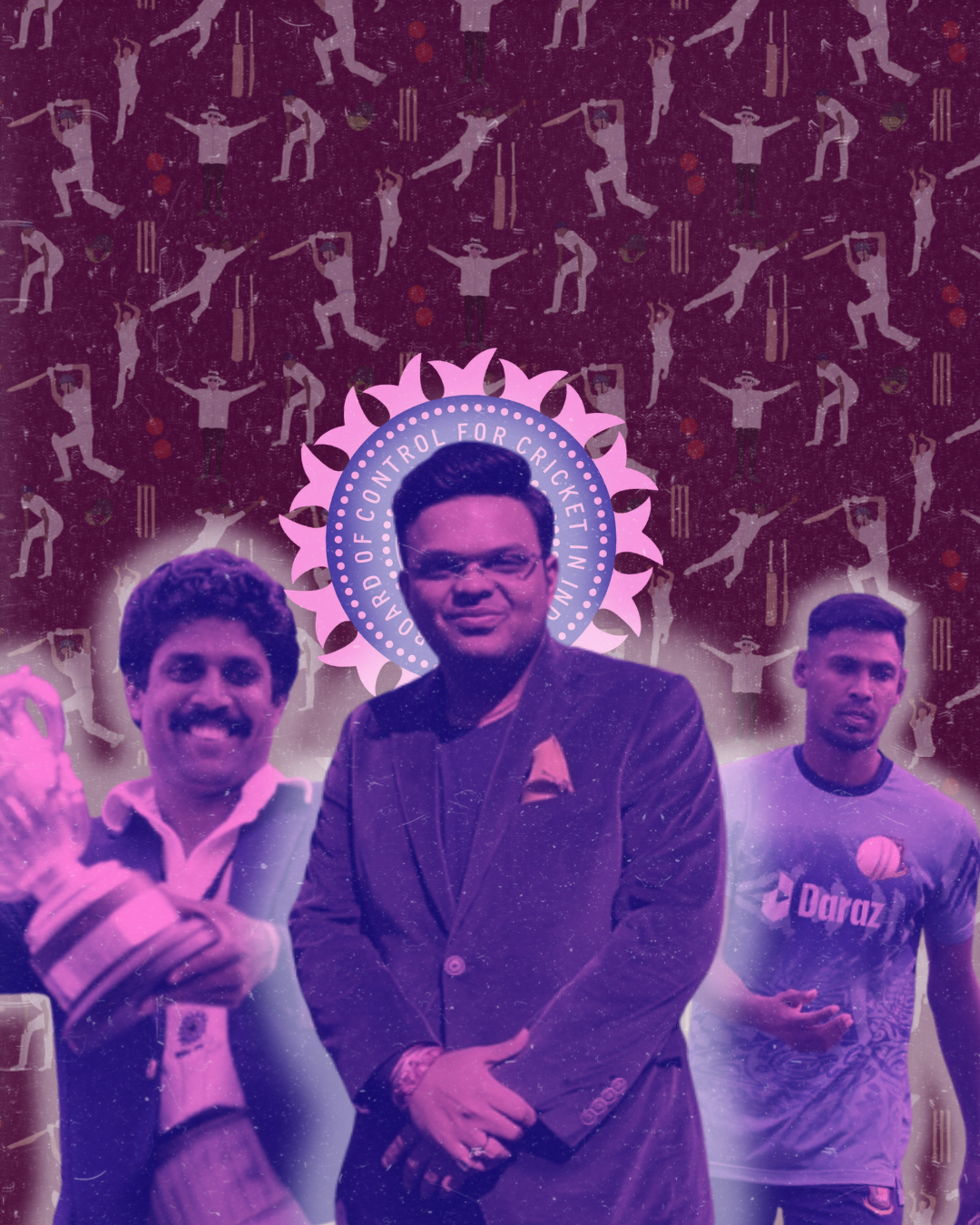
When India won the World Cup in 1983, it was the perfect underdog story. A small team with limited funding, climbing to the top of the ladder through sheer grit and determination, is a feel-good story that is engraved into the hearts of every Indian cricket fan. But now, fast-forward four decades, and the situation looks completely different.
The BCCI brings in the largest audience share of all the boards and, in turn, gets 38.5% of ICC’s revenue. In addition, Jay Shah’s tenure as ICC Chairperson has effectively solidified India’s position as a leader in international cricket. However, with this leadership has come a wave of political issues that have begun to plague the cricketing world.
The recent T20 World Cup controversy, in which Bangladesh refused to play in India, is just one example of this. The dispute reportedly began after scheduling conflicts between the IPL and Bangladesh’s international commitments, particularly surrounding the availability of fast bowler Mustafizur Rahman. Tensions escalated when the Bangladesh Cricket Board objected to decisions made by the Board of Control for Cricket in India regarding player participation, eventually spilling into broader diplomatic and cricketing friction.
The ICC, in response, after a short deadline, decided to remove Bangladesh from the T20 World Cup altogether and replace them with Scotland. It is interesting to note that when India had similar concerns about their matches in Pakistan during the 2025 Champions Trophy, the venue was shifted to a neutral location. This hypocrisy, of course, is only possible due to India’s massive audience pull that has effectively arrested any attempt the ICC could have made towards fairness between nations.
Pakistan, not to be left behind, has had its fair share of controversy with India in the past few years. Most recently, deciding to boycott the World Cup match against India to “stand in solidarity” with Bangladesh. Even though Pakistan backtracked on its decision a week later, the decision itself was a petty move that serves only to further the divide that has formed between India and Pakistan on the field. The “greatest rivalry” tag that accompanies every India vs. Pakistan match is now being played off the field first, with needless controversy affecting every game.
India is no better in this exchange, having an unofficial no-handshake policy against Pakistan, first adopted by the men’s team in the 2025 Asia Cup. This unsportsmanlike move has no significant relevance, since India is still platforming Pakistan by playing against them. This empty gesture perfectly embodies the petty politics at play here, where optics are valued more than morals.
The ICC is, of course, the biggest enabler in this. In its effort to monetise cricket as much as possible, it has essentially handed over the reins to India and its massive market to shape the future of cricket. When a cricketing nation like Bangladesh or Pakistan has demands, they can be evaluated through an objective lens and refused on the grounds of the ICC’s existing principles, but when India, with the massive revenue it generates as its bargaining chip, has a similar demand, it has to be accommodated.
The ICC cannot be mentioned without mentioning its current chairperson, Jay Shah, son of India’s Home Minister, Amit Shah. He has also been the subject of many controversies, such as when he was called out for openly supporting India’s military operations, while Usman Khawaja was banned from displaying a peace symbol on his bat. He has been criticized multiple times for his handling of controversies involving India by prominent cricket figures, both past and present. The massive influence he holds, both in the cricketing world and in the Indian political sphere, is also a factor in India’s dominance over cricket. Perhaps taking a page from his father’s playbook, he is very active in all events, press conferences, and ceremonies above and beyond what his role requires, yet strangely silent on the myriad contretemps plaguing his ICC reign.
India’s monopoly of power over cricket is dangerous for the sport’s growth. Bangladesh and Pakistan are by no means small cricketing nations. They also command huge audiences in their own right, but are still dwarfed by the sheer size of India’s fanbase. If India can effectively bully these huge nations, then what’s protecting the smaller and associate nations?
At the end of the day, it would be unfair to say that India is the sole cause of the game’s politicisation. The nation is not completely unfounded in its demands from the ICC. The problem lies in India’s undefeatable position at the top of the cricket food chain. When the nation is big enough to swallow all other opposing nations in every aspect, it is almost impossible to stand against them.
What the ICC must make clear is that the pitch is not a geopolitical playground.
India, or any other nation for that matter, must not be allowed to use the system of the game to throw cheap shots at its political rivals. Cricket has had a longstanding tradition of bringing nations together for civil competition; it did not earn the moniker of “The Gentleman’s Game” for no reason.
As it stands, the ICC needs to focus less on its financial gain and more on the spirit of the game they play. Because no matter who wins these petty contests, cricket only suffers.