What We Don’t Get to Watch: CBFC and its shift from domestic morality to diplomacy
By Aadhya Angirish on April 15, 2026
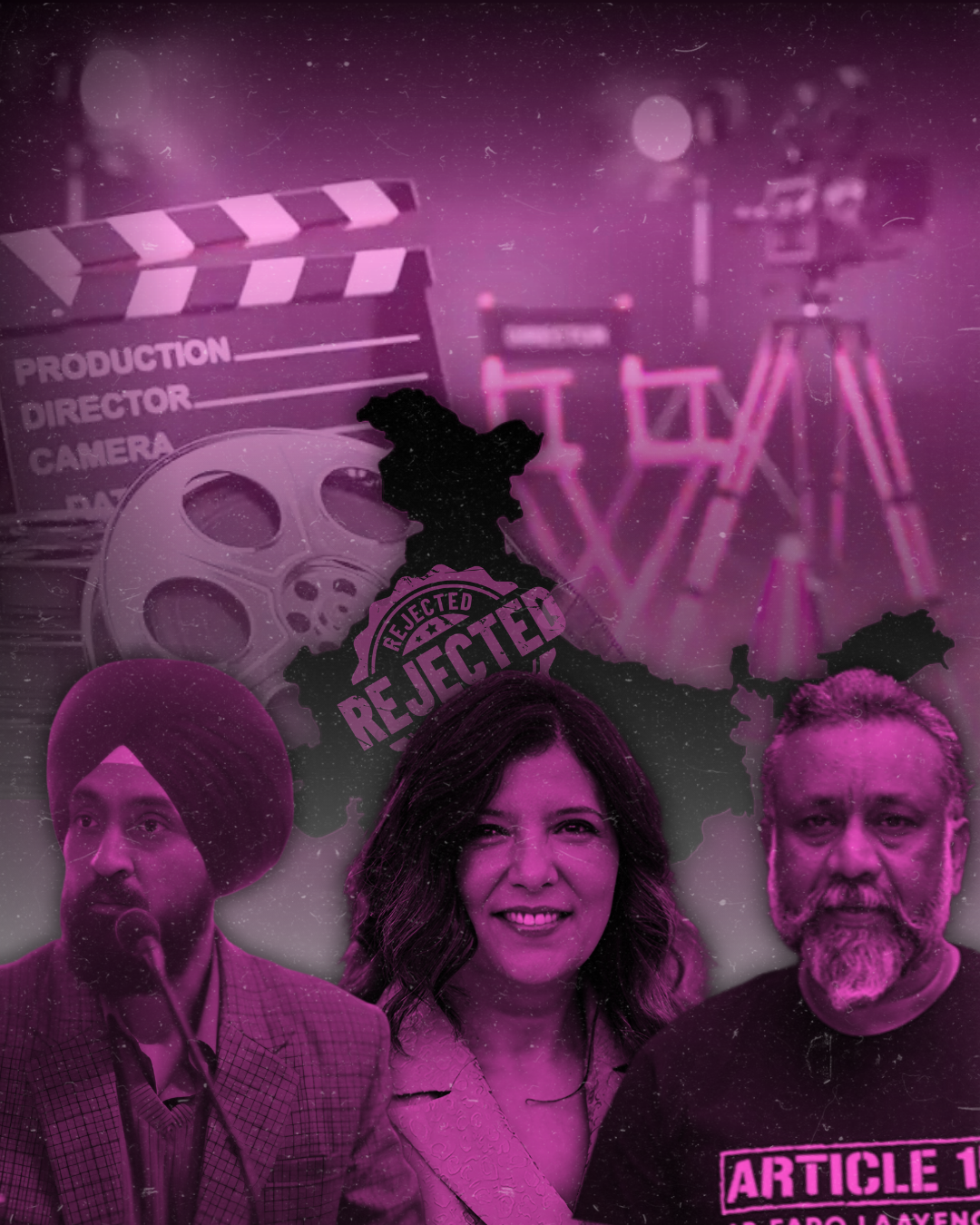
The blocking of The Voice of Hind Rajab doesn’t feel like just another censorship story. It feels like a quiet pivot – the kind you don’t notice immediately, but one that changes the rules of the game. The 2025 docudrama, written and directed by Kauther Ben Haniaby, tells the story of a 6-year-old girl who was killed by Israeli forces during the Gaza war in 2024.The Oscar nominated film has been orally rejected in India by the Central Board of Film Certification (CBFC).
The reason?
“The screening of the film would negatively impact the strong India-Israel relationship.”
If this is indeed the basis of rejection, then we’re no longer talking about morality, or even public sentiment, which are the traditional grounds that CBFC claims to safeguard. We’re talking about plain diplomacy.
There’s even a law backing such censorship decisions. The Cinematograph Act, 1952 gives the CBFC the power to deny certification if a film threatens any of the following – sovereignty, public order, decency or in this case, “friendly relations with foreign states.”
It’s just that the last phrase suddenly feels heavier. The irony of the phrase is that it’s vague enough to stretch and powerful enough to justify almost anything. The rules for censorship games haven’t changed, they’re just used differently.
Take Diljit Dosanjh’s Punjab’95. Originally titled Ghalughara (Massacre), [a][b][c]the film follows human rights activist Jaswant Singh Khalra, who was abducted in September 1995 while investigating police brutality. This film has been stuck in limbo, with reports of over 100 suggested cuts. This cannot be called editing, it’s rewriting and changing the film’s entire structure.
There is also Sardaar Ji 3 (2025) , which ran into trouble because it cast a Pakistani actor at a fragile point in the Indo-Pak relations. The film became political simply by existing in the wrong moment. Even outside mainstream Bollywood, this pattern prevails. Films like Sandhya Suri’s Santosh, a highly internationally acclaimed film, which deals with caste and policing, have struggled to get clearance. Others like Homebound make it through – only after being trimmed, muted and softened. This is what I like to call, banning the movie pyaar se. It’s not banned, just adjusted, right? But that distinction matters. Earlier, censorship in India was loud. Ron Howard’s brilliant The Da Vinci Code faced bans because it offended religious groups. Kamal Hassan’s Vishwaroopam was stalled after protests over representation. Those were visible battles, they were reactive, messy, and public. You knew exactly what was being objected to, more importantly by whom. Now it’s quieter, pre-emptive. Films aren’t just being censored after outrage, they’re being filtered before outrage even has a chance to exist. It’s not about what a film says. It’s about if it might cause a protest, a headline or a diplomatic discomfort. The art and story then doesn’t matter, even if what the film shows is the truth. And that shift is subtle, but massive. This is how censorship turns into narrative control. It’s simple. Like mentioned above in Punjab’95, there are no blanket bans. Instead, it’s slower. A delay here. A demand for cuts there. And then on our hands we have a film that never releases. Over time this creates a pattern of selection.
Of course, there’s another side to this. India is a complex, volatile, deeply diverse country. Cinema here has the influence, a film can trigger protests, or spiral into something bigger than intended. From that lens, the CBFC’s caution sometimes can feel justified. The line between supervising and controlling changes where diplomacy starts shaping storytelling, turning cinema into a strategic space rather than a cultural one, managed and filtered through what the state is comfortable with, not just domestically but globally. This article should make us realise that it is not only about what we get to see, it’s more about what we don’t get to see. It’s not about if The Voice of Hind Rajab should have been cleared or not, I think the answer’s quite simple, the film talks about the death of a civilian, a kid during one of the biggest genocides the world has seen – it’s about questioning the fact that such stories are made sure to never be told loudly enough to matter, in India.
Think about it. Would the brilliant critique of caste in Anubhav Sinha’s Article 15 survive the CBFC today?