PUNJABI AA GAYE OYE! From Regional Sound to Stadium Spectacle
By Tanushka Rathore on January 25, 2026
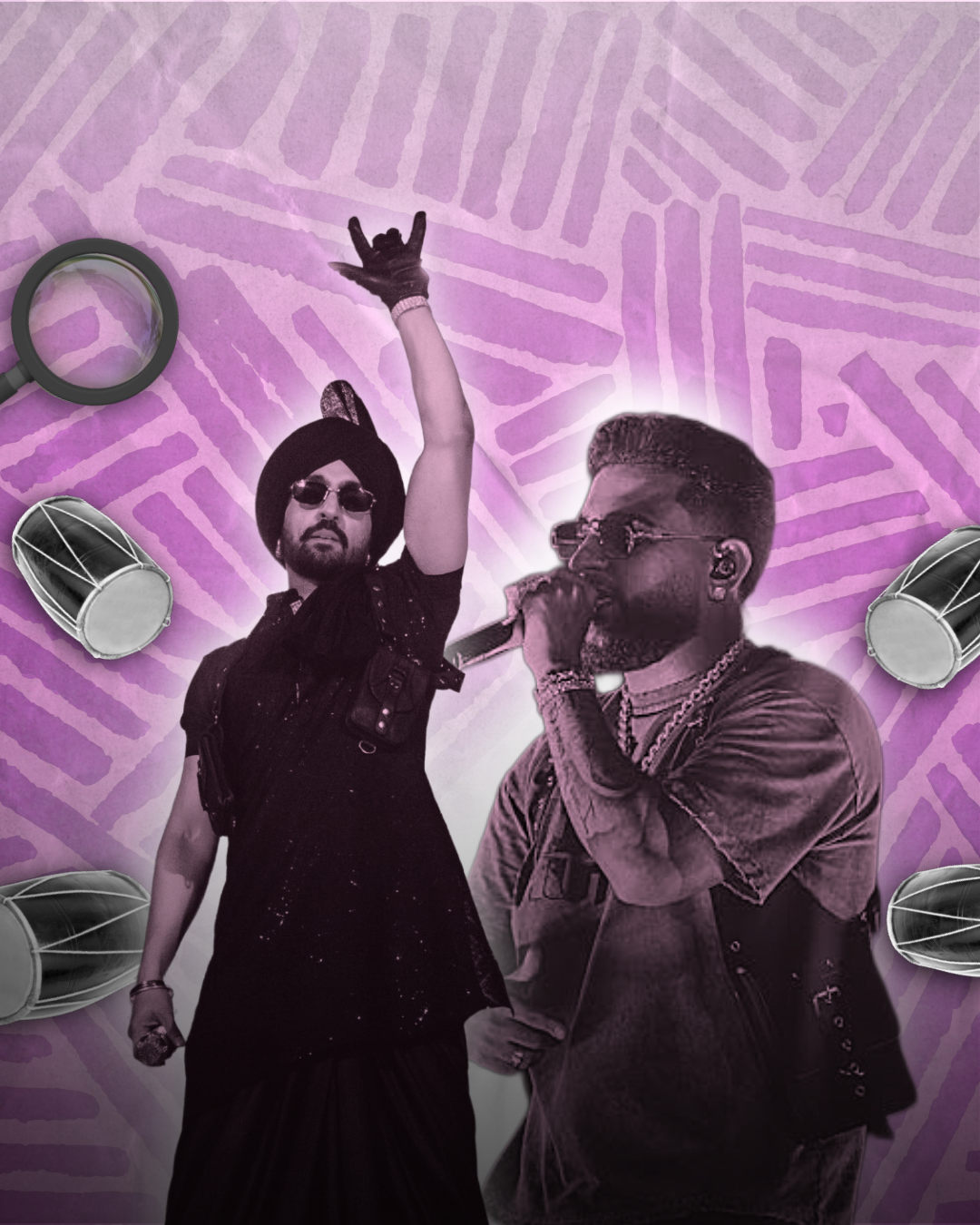
If Bollywood once measured success by the box office, Gen Z, like always, has a different scale: sold-out nights, Instagram flexes, and how loudly a crowd screams the lyrics in a language that has been termed “niche” by the mainstream for a long time. I must confess, there is something deeply unserious about the Indian music industry debating relevance while Punjabi artists quietly (or, rather, loudly) sell out stadiums in minutes. At some point in the last two years, Punjabi Pop did not revolutionise; it just stopped asking for space and simply stepped up and took it. Not a playlist slot or a crossover feature, entire stadiums. When a “regional” sound fills stadiums faster than national pop can fill theatres, the hierarchy isn’t evolving, it’s collapsing and honestly? We are here for it.
But let’s address what seemingly one would assume is the biggest hurdle for the Punjabi artists, Language. As it is, you couldn’t be more wrong, you see, when Diljit Dosanjh belts out “PUNJABI AA GAYI OYE”, in a crowd that isn’t even Indian, it isn’t about Indian representation, it’s a declaration made out to theworld at large. The real shift hence begins with the aforementioned language. The phrase has since slipped out of concert chants and into pop culture shorthand used online to signal arrival, dominance, and a refusal to translate oneself for comfort. Very Punjabi Pop if you ask me.
Speaking of the term “Punjabi Pop”, Karan Aujila’s rise has normalised such terms and marked a reclassification. A look at its marketing history suggests this genre does not position itself as “regional but relatable”; rather, it’s being presented as complete, self-sufficient, and loud. Rightly so. The expectation isn’t that PunjabiPop should adapt itself or dilute itself; it’s that the mainstream should adjust its ears. An ambitious approach? Yes. Did it work? Wait till you see the receipts.
Alright, now allow me to back my claim. Diljit Dosanjh’s Dil- Luminati Indiatour sold out its tickets in under two minutes and has also achieved an unimaginable milestone of selling 100,00 tickets within fifteen minutes, numbers usually reserved for legacy pop bands or global pop juggernauts. Karan Aujila, meanwhile, quietly reset the ceiling by pricing VVIP tickets to his concert at 15 lakh rupees a pop, and lo and behold, still sold out all the tickets, evidence that Punjabi pop is not only mass appeal but also a premium spectacle. As if such numbers weren’t enough, not far behind is AP Dhillon’s Brownprint India tour, which followed suit, selling out in minutes and generating over 10 crores in revenue. And yet, in a rare moment of self-reflection, Dhillon himself complicated the narrative. On The Ranveer Allahbadia show, he stated that “sold out in 15 seconds” often owes as much to marketing tactics as organic demand. But that in the end only sharpens the point: even when the hype is engineered, the hunger is real. You can manufacture urgency, and as it is, there isn’t any rule against that, but can you really fake a stadium full of a crowd? Not really, hence. Manufactured or not, the demand for concerts currently is real, and so is the massive scale on which these concerts operate. As much as stats are a flex, it would be foolish not draw the focus to what this phenomenon indicates, psychologically and culturally. What these concerts at large are selling isn’t music, at least not only music, they sell recognition. For Gen-Z, Punjabi pop functions less like entertainment and more like identity: something you show up for, dress up in, and align yourself with publicly. Language, often assumed to be the genre’s biggest limitation, instead becomes its sharpest flex. You don’t need to understand every lyric to feel what’s being claimed. Punjabi pop doesn’t pause to translate itself, doesn’t soften its masculinity, doesn’t chase relatability as a selling point. It assumes cultural confidence as a given, sometimes at the risk of arrogance. It stands so firmly in contrast to Bollywood music, which has, since time immemorial, chased relatability, a general likeliness by achieving neutrality and crossover approval. While it is not at all my aim to bring down a specific music industry, it is rather clear that Punjabi artists are no longer content with featuring for thirty seconds in a song, and a Punjabi rap in a Bollywood song is no longer how they approach their art or the audience.
What makes this moment feel less like a phase and more like a turning point is the ecosystem it has managed to build. Punjabi pop is no longer surviving on a select few megastars carrying the genre on their backs; it’s doing something far more dangerous to the industry’s usual cycles—it’s creating successors. The door has been pried open wide enough for newer artists like Ikky, Shubh, and Sukh to step in without having to sand down their sound or translate themselves for comfort. In a pop landscape obsessed with virality and one-season relevance, this kind of continuity is rare. Movements that can reproduce don’t fade quietly. They outgrow the idea of being a “moment” altogether.
Punjabi pop’s takeover isn’t loud because it wants attention; it’s loud because it refuses erasure. In an industry long obsessed with neutrality and palatability, this moment feels disruptive precisely because it doesn’t explain itself. These artists aren’t positioning Punjabi identity as a bridge to something bigger; they’re declaring it complete. The confidence is not aspirational; it’s inherited. And credit where credit is due, Gen-Z, a generation fluent in spotting manufactured authenticity, recognises that immediately. And when a general recognition of such scale does take place, it easily fills venues and sells tickets, because the audience applauds the daring and admires the raw personality, no matter how much processing it takes behind the scenes to appear that way. The final product delivers exactly what it sells.
And here’s the real shift: Punjabi pop hasn’t “arrived” into the mainstream, it’s rerouted it, diverted it even. The centre no longer belongs to whoever shouts the loudest in Hindi or English, or whoever plays safest. It belongs to whoever commands belief, community, and presence at scale. Stadiums don’t lie. Neither does silence when the beat drops and thousands move in sync, lyric-perfect or not. Punjabi pop isn’t the future because it’s trending. It’s the future because it refuses to translate itself to be understood. Pop culture is tricky; it keeps moving, it never stops. To make a mark is to, halt it, even if it is for a while, make people fixate on one thing for as long as you can. And with the timeline of two years and counting? Right now, I wouldn’t say it’s about to stop anytime soon. People look for those who get on the stage with conviction, and a refusal to the old norm. But when it’s venues after venues which are sold out and an army of people cheering in what was never considered “mainstream”, that precise refusal sounds a lot like power, and that power deserves all the applause it gets.