Pedestals, Not Policies – The Making of Political Icons
By Aadhya Angrish on February 11, 2026
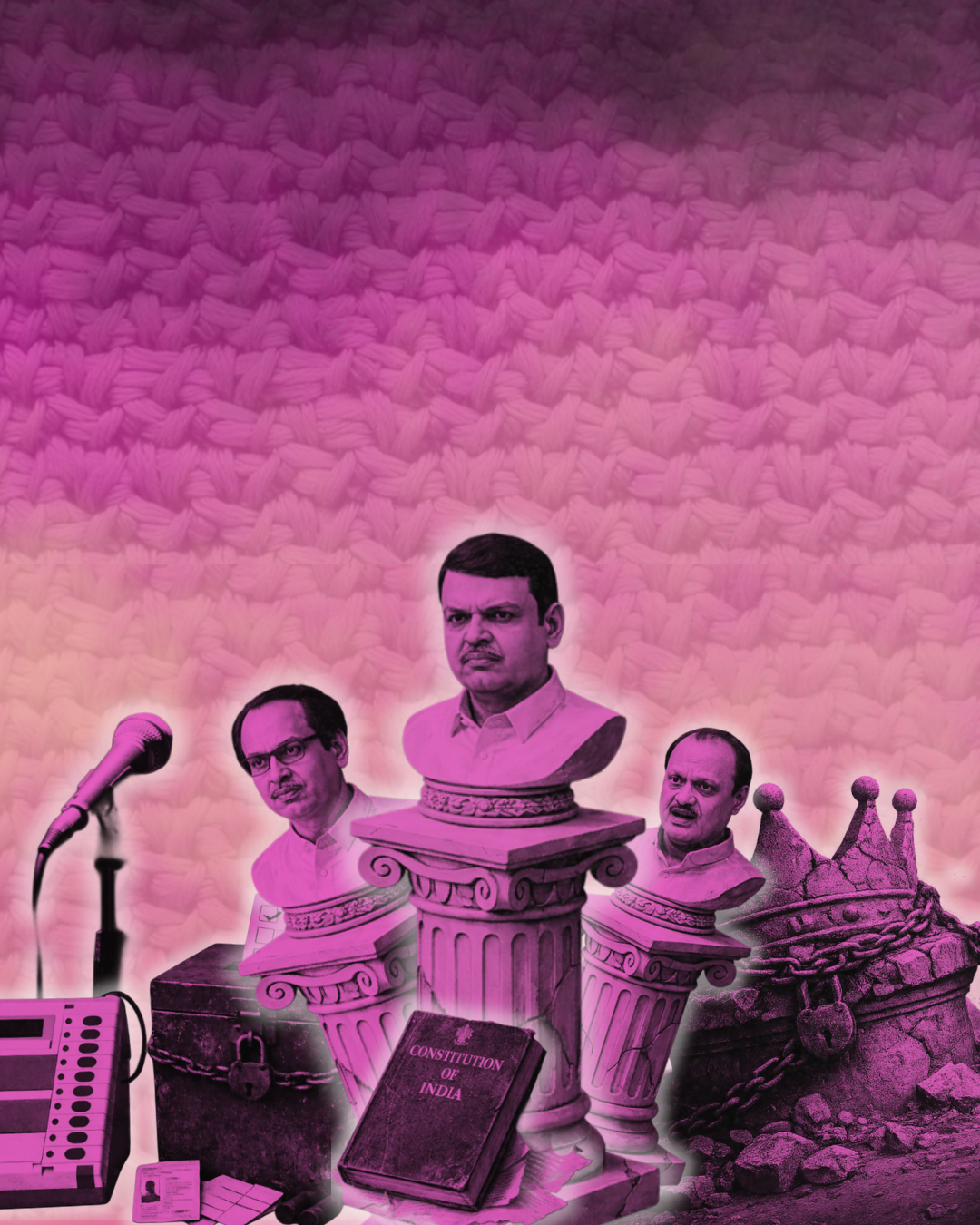
In modern politics, leaders are no longer remembered only for the laws they pass or for the crises they manage. They are remembered as symbols, carefully framed by you and me, emotionally charged by you and me, and often made immune to questioning by you and me. Politics today is not about governance; it is about power, praise, and the gradual construction of a pedestal. And this process develops in four stages: political legacy, idealisation, glorification, and, lastly, pedestalism. These stages are originally distinct concepts that bleed into one another, until one cannot distinguish where leadership ends and worship begins.
The initial stage, political legacy, in its purest form, is measurable. It is judged by governance, by reform, by institutional change, by electoral accountability and by long – term impact. Legacy can be debated, no, it is meant to be debated, criticised, dismantled, revised or even defended. But legacy rarely remains unscathed. The moment memory replaces record, the second stage idealisation begins, where flaws are softened, contradictions excused, and inconvenient chapters quietly forgotten. With this, politics slips into glorification. Here, leaders are no longer assessed but rather solely celebrated. Public memory becomes selective, emotion-driven and often repetitive. Only achievements are highlighted and repeated until they become folklore. Context and rationale disappear. Speeches turn into forced slogans, and what was supposed to be a complex career and position is reduced to a handful of heroic, entirely irrelevant images. Finally, comes pedestalism, the stage that marks the end of democracy. Hereon, a leader is not a political figure but a concrete idea of stability, strength, pride and continuity.
Criticism feels parallel to sacrilege, accountability is mistaken and labelled as disrespect.
Governance takes the back seat, reverence takes control. In real-time, our response to the absence of the said control solidifies pedestalism. Retirement? Illness? Or even death. These moments reveal whether a leader represents ideology or if they are the ideology. Consider the public and very much collective response to the news of Ajit Pawar’s death. In our minds, propagated by the media, the order of thought shifts from policy to permanence. “An era has ended.” “There will never be another.” “A pillar has fallen.” – as though governance itself has been orphaned? This is not unique to the Maharashtrian leader. Nationally and actually globally, leaders increasingly outgrow the organisations they belong to. Parties turn into mere vehicles propagating fame. Ideologies and agendas are rendered negotiable. Public loyalty transfers from principles to personalities. And when this takes place, the leader begins to feel irreplaceable.
Funnily enough, the irony is that most political figures do not begin their careers seeking reverence. They emerge from movements, coalitions, ideological battles and ideological commitments. But just like clockwork, longevity in power breeds familiarity, which in turn breeds dependence. Citizens (you and I) begin to associate governance not with systems but with faces. Stability is mistaken and popularly demanded as permanence, likewise continuity for indispensability. And once a leader is declared indispensable, democracy quietly begins to negotiate its own limits.
A party can survive criticism, a pedestal cannot.
If this trajectory continues, the future of politics will look less like ideological contestation and more like brand management. Leaders will be curated in real time. Criticism or a demand/want for change will be reframed as negativity. Elections will feel less like choices and more like compulsions and affirmations.
Ask yourself the uncomfortable question – what role do we as citizens play in building these pedestals? Now, take responsibility: commit to separating admiration from accountability. Refuse to applaud uncritically; demand scrutiny and continual debate. Legacy, when allowed to harden into pedestalism, does not strengthen democracy; it slowly corrodes it. Choose to be an active guardian of accountability.
The moment you make politicians bigger than the party, the principles, the people they represent, politics stops being participatory. It becomes performative. Break this cycle. Insist on citizenship over loyalty. Engage critically, debate relentlessly, and demand grounded legacies. The course of action is not to reject the political legacy altogether but to keep it grounded. Take an active role in upholding this balance.
Democracy does not need icons to survive. It needs systems that function even when icons fade. Be vigilant, demand functioning systems, and do not wait for others to safeguard democracy. Own your role in sustaining democratic values.