Homebound, Reviewed: A film that refuses to look away
By Shivanya Anurag on December 31, 2025
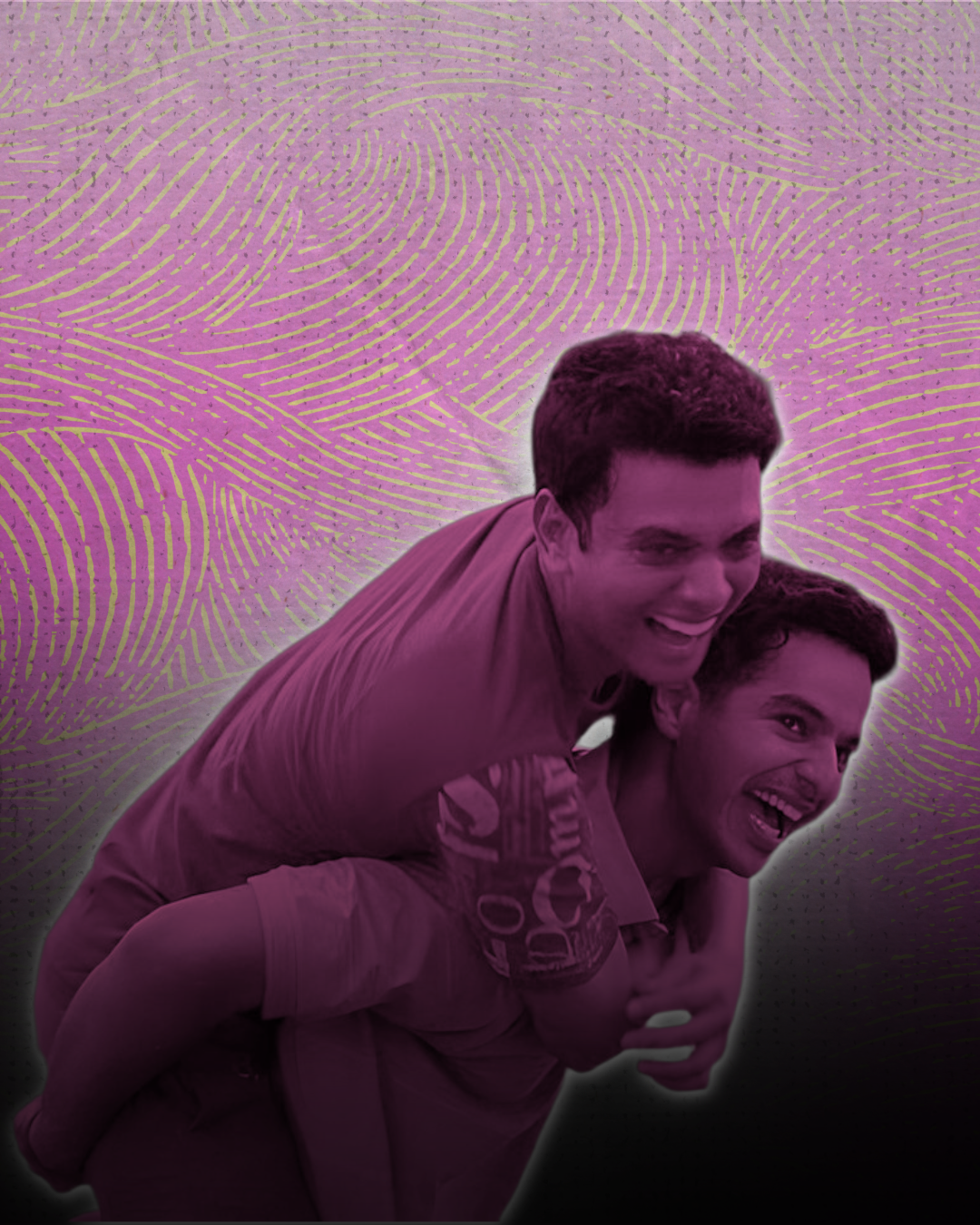
On May 21, 2025, Masaan maker Neeraj Ghaywan’s Homebound premiered quietly at the Festival de Cannes but left to an applause so long it continues to echo in the ears of audiences months later. Executively produced by Hollywood legend Martin Scorsese and backed by one of India’s biggest production houses, Dharma, the film maintains its true indie touch throughout its 2-hour 2-minute runtime. However, there is so much more that makes India’s official Oscar’s entry not just special, but significant.
Spoilers Ahead!
Somewhere in the north of India, childhood best friends, Chandan Kumar (Vishal Jethwa) and Mohammad Shoaib (Ishaan Khatter) share the dream of being Sipahis, or policemen, to escape their daily struggles of caste-based and religious bigotry. The film opens in near darkness, the two leads sitting on top of a tractor, occupying the centre frame, illuminated only by a small torch trained on a book they struggle to read from. The frame quietly distils the film’s core: two beings surrounded by darkness, yet clinging to and sharing a fragile source of light, and with it, hope.
The tractor drops them at a station, where they wait for the Pravasi Express to reach their centre for the national police exam, except they are just two out of a thousand at the platform. A change in platforms leads to examinees using the rail tracks to get to the other side. Lost civic sense portrays them as animals, and survival of the fittest happens to be the rule of this jungle, too. When they finally get on the train, they see people on top of more people in a congested compartment. Chandan simply remarks, Pariksha dene ja rahe hain, ki jang ladne?Are we going to give an exam or go to war?
What initially seems like a simple film gradually reveals itself to be layered, with its most ordinary moments bearing the largest metaphors. One such scene is the dialogue between Chandan and his parents, where he is trying to understand why his mother never takes care of her cracked heels. To which she replies, that his grandmother’s heels were far worse than hers, and people said when the old woman marched through the fields like a soldier, she could reap the entire harvest with her nukeeli adiyaan (cracked heels). This, she said, was all she inherited in viraasat. While it represents riches for the upper class, for much of India, it is nothing more than the silent legacy of poverty.
The film moves with Chandan and Shoaib’s zest for life, which, even in ups and downs, with failures and almost successes, never dies. Their resilience and commitment to securing a place at the table are tested time and again throughout, and it is their friendship that keeps them ashore.
Chandan Kumar, as he avoids giving away his last name to conceal his caste and avoid unsafe confrontations, comes from a Dalit family. While he waits endlessly for recruitment despite clearing the exam, his parents and sister bear the cost of his dream of joining the police force. The film offers a painfully honest portrayal of women sacrificing themselves for survival through Chandan’s sister (Harshika Parmar), who is forced to lay down her own aspirations as stepping stones for the man of the house. Ultimately, Chandan abandons waiting and takes his father’s place at a mill in Surat. This arc forces the audience to confront the reality of unemployment in the country and acts as a sharp slap to the lazy assumption that poverty is about hard work. Homebound reminds us that poverty is shaped by far more than labour alone.
Mohammad Shoaib comes from a caring mother and a strict father, unhappy with his choices. Driven by a quiet, inspiring resilience, Shoaib is tested when he fails the exam that his friend passes, but he does not break. He takes up work as a peon and, through small steps that seem too big, like speaking up in the middle of sales pitches, shines with his entrepreneurial instinct, or as said by his manager, his mentor (played by Shreedhar Dubey), bechu parvrati. But this illusionized success doesn’t last as Shoaib is met with casually bigoted comments while watching a cricket match at his Boss’s farmhouse. The scene exposes how easily nationalism in this country collapses, how a player’s poor performance can invite accusations of being anti-national. It is heartbreaking to watch a character come so close to such modest dreams, something as basic as arranging a knee replacement for his father, only to be forced to choose between self-respect and self-fulfilment. When they finally settle in at Surat, send money home, and move from old heartbreaks, a nationwide lockdown due to Covid-19 hits them like a thunderclap.
Neeraj Ghaywan’s storytelling is proudly honest and raw. His caste commentary holds the audience in such a way that they can’t look away. His strong female characters have every quality to be independent, yet they are not, which is the reality of patriarchal society. The seemingly small discriminations Shoaib faces scream a larger, louder meaning and consequence.
To top it all up, Ghaywan’s real plot point, the pandemic, revealed much later in the film, is used to the best it could have been. Separated from their families and the place they call home, they take desperate measures to try to survive. Living on a little more than rice and salt, shutting their eyes to imagine the known flavours of Ammi’s elaichi and kesar-scented chicken biryani, watching the news, eyes glued to their phones every minute, anxiously asking the mill manager, tens of times, when the work will resume. But when all else fails, they set out on foot with a single shoulder bag to reach home as thousands of others did during the pandemic.
What follows is not just misfortune but the reality of the pandemic. The struggle to get home breaks not just the characters but the viewers, scene by scene. Shoaib’s resilience and Chandan’s helplessness almost make you feel guilty for the comfort many of us had during the pandemic. But this is not the saddest part. It is the fact that the film begins with a disclaimer stating any parallels to real-life characters are purely coincidental, when Ghaywan was in fact inspired by an article in the New York Times, titled: Taking Amrit Home by Bashrat Peer.
To get released in cinemas and OTT platforms, the film had to undergo 11 cuts dictated by the censor board. After a wait period of three months, when CBFC finally gave the team a date for the screening, a total of 77 seconds of footage was removed. Cuts included 6 instances of muted or replaced words, including ‘gyan’ and the deletion of the line “Aloo gobhi… khaate hai,” a 2-second puja scene, and shortening a cricket sequence by 32 seconds. Part of the crew has reportedly commented that the film was “destroyed in parts.”
Yes, the subject of the film is heavily sensitive, but diluting the filmmaker’s intent by removing crucial metaphors is highly unfair. These cuts are disrespectful not just to the piece of art but also to the audience for deeming them too dumb to interpret meanings for themselves. It is truly a loss that most of us, including me, will never see the uncut version.
Dharma has given Indian cinema arguably the best film of this year yet, Uncle Karan had to somehow make it about his darling Nepo babies. Jahnvi Kapoor’s screentime is so little that it hardly lets her qualify even as the second lead, yet she is given the status of the leading lady of the film.
Ironically, for the beautiful class commentary and struggle shown in the film, Vishal Jethwa, a man who has built himself from scratch into this phenomenal actor, is placed alongside someone born into privilege. And if the argument is giving all roles equal importance, there should be enough mention of Shalini Vatsa, heart wrenching as Chandan’s mother; Harshika Parmar, brilliant as Chandan’s sister; Pankaj Dubey, abrasive yet protective as Shoaib’s Father. These actors have added so much character to the film that their performances deserve separate nominations. Ishaan Khatter, remarkable since Beyond the Clouds, has once again given an impeccable performance that makes you overlook his familial lineage.
The warm tones, the perfect edit saved by Ghaywan even after the CBFC scrutiny, and the 4:3 aspect ratio that makes you feel like a part of the film are so precisely executed that there is little left to question its Oscar nomination.
When the film ends, the image that lingers is not the walk home or the suffering that is documented, but the quiet insistence of two people holding on together. Instead of shouting politics, Homebound lives it and questions it. And that is exactly what true cinema does: it holds up a mirror to society and compels audiences to reflect on themselves. Cheers to a near-perfect film. That’s all. See you after another movie.