From Protection to Policing: Examining Bajrang Dal’s role in the Public Sphere
By Swarnim Sethi on February 8, 2026
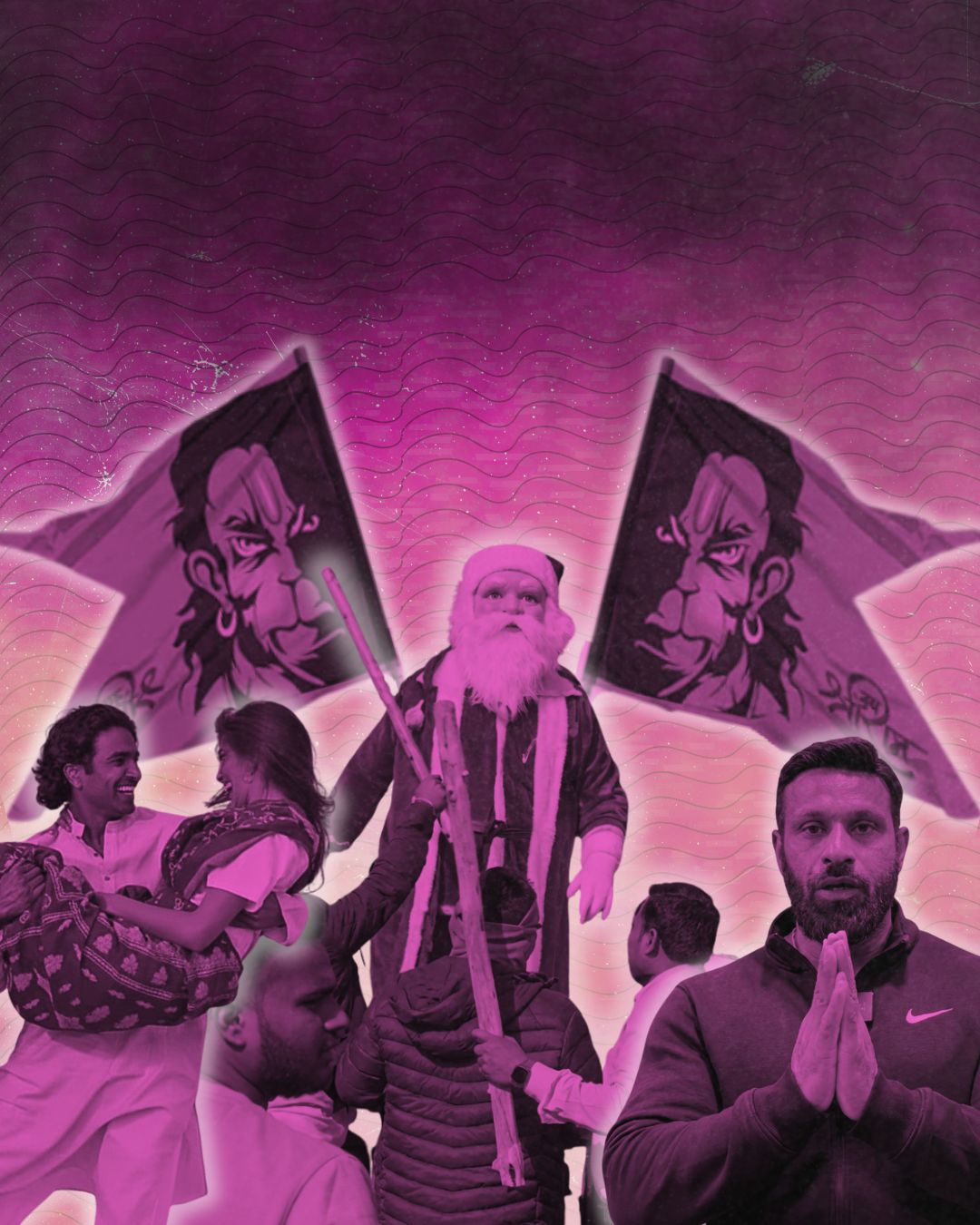
Bajrang Dal, founded in 1984, describes itself as a Hindu youth organisation that works towards the protection of religious values, cultural services, and social work. Officially, the organisation claims to engage in ‘constructive activities’ such as maintaining temples and order during religious gatherings, protecting sacred animals like cows and providing relief during any climate.
Unfortunately, however, over the years, Bajrang Dal has been increasingly associated with street/communal violence, moral policing, contradicting the very values it claims as its foundation.
An incident that occurred in Bareilly Utttar Pradesh, made me question whether the act of “protecting” one’s religion can be done at the cost of fear, hostility and communal division?
Ten friends were present at a Cafe attending a birthday party hosted by a nursing student, among them two were Muslim men. Members of Bajrang Dal stormed into the cafe, causing chaos, shouting slogans, and even assaulting those boys, accusing them of “love jihad “without any proof or provocation. Despite repeated clarification by the birthday girl that the gathering was just a celebration mob refused to back down, and violence was only subdued once the police arrived. Ironically, but not shockingly, two Muslim youth, along with cafe workers, were detained while those who initiated the assault faced NO immediate consequences.
Another incident, which is currently unfolding in Uttarakhand, further underlines this trend. This incident took place in Pauli Garhwal district, where alleged Bajrang Dal members targeted a Muslim shopkeeper simply because his shop used the word “Baba’in his shop’s name – a name that has existed for thirty years without any issues. During this dispute, two local Hindu men, gym owner Deepak Kumar and Vijay Rawat, stood up to the mob, questioning why a muslim man cannot use a word freely that is used by others as well. In a video that is recently going viral on social media, we can see Deepak introducing himself as “Mohammad Deepak “ deliberately merging identities to express his belief in an inclusive and diverse India; that said, this act of inclusivity was not received well by the mob. Since then, Deepak has received life threats, and there have been multiple crowd gatherings outside his house and gym, threatening his family and chanting slogans against him.
What makes the situation even more alarming is the role of the police, who have consistently projected a position of neutrality in such incidents. Rathrt than taking a stand and holding those responsible for intimidation and harassment.
These are not isolated incidents. They form a broader pattern that deepens religious divisions in a country like India that is already marked by an extremely complex and sensitive communal history.
Bajrang Dal derives its name from a Hindu deity, Bajrang Bali, Lord Hanuman, who is known for devoting his life to reuniting Rama and Sita. He is remembered as a symbol of selfless service, compassion, and someone whose strength was used not to divide but to unite. This raises an unavoidable question again and again: are they doing justice to the name they so proudly carry?
This question becomes even harder to ignore when celebrations of another religion are deliberately stopped or even attacked. Cristmas celebration in multiple places was stopped, decorations were broken, and in this process, small vendors were harassed and left struggling to earn their daily livelihood.
Has the celebration itself become an act of provocation? Perhaps here I must stop you and urge you to ask yourselves: in the name of safeguarding one’s religion, are we allowing fear and intolerance to redefine what faith looks like in public life?