
Breathless In Delhi: Uncovering The Class Lines Hidden amongst the Haze
By Nihira Pillai on November 30, 2025
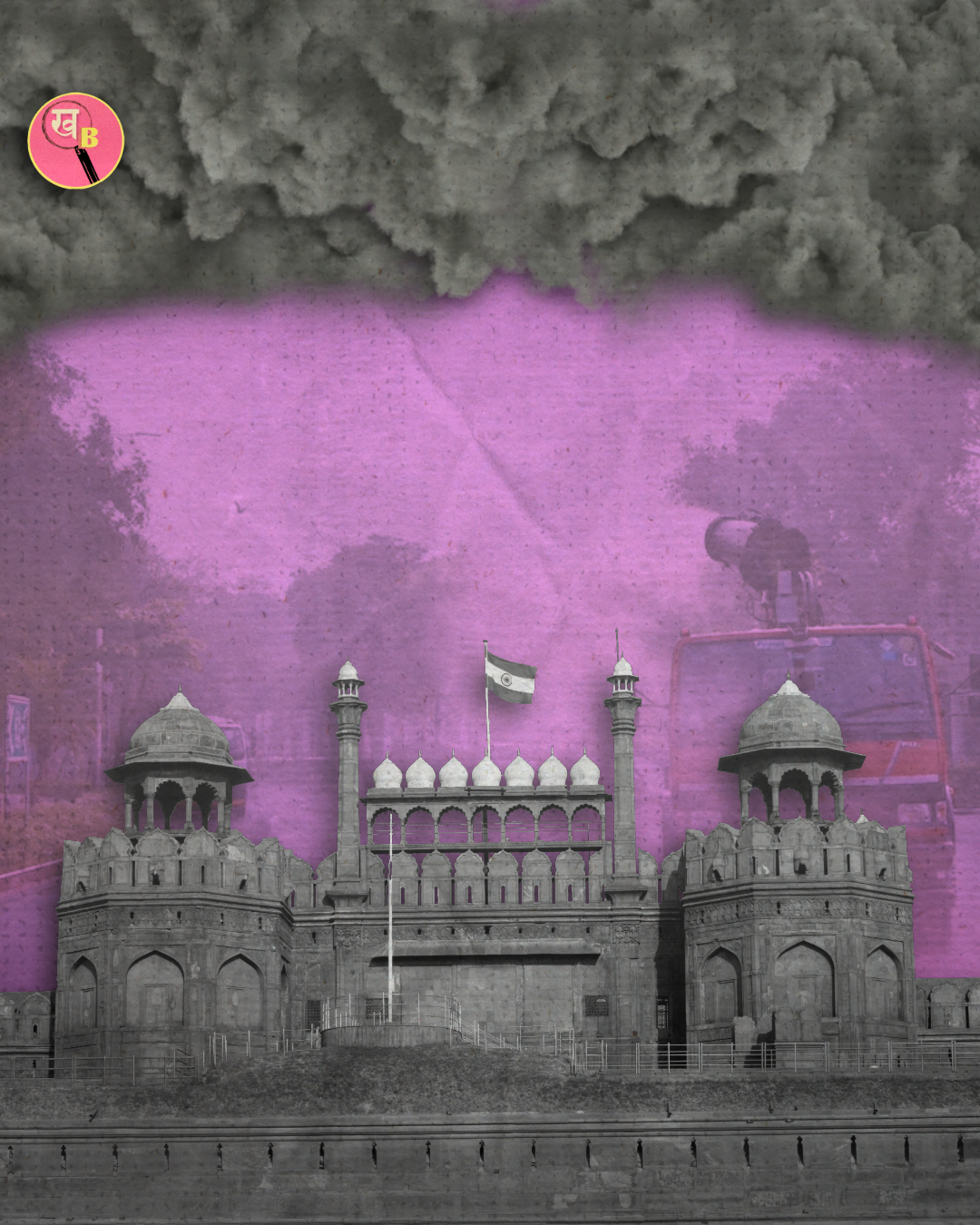
Every year, as Delhi sinks into its annual smog crisis, we see a host of discussions on new environmental policies, the rise in air purifier and surgical mask sales, schools shutting down, AQI monitoring, and the list goes on. Yet, strikingly and perhaps unsurprisingly, there is little attention paid to the city’s most vulnerable, who lack both the financial means and the awareness to protect themselves in the gas chamber that Delhi has become today. As clean air is up for sale, the Delhi pollution has stirred up a class war between those who can afford to breathe and those who are struggling to grasp for air. In this battle for survival, financial means are the armour, and the wealthy wear it well.
At 9:00 a.m. on 22nd November, NDTV reported Delhi’s AQI at 360, deep in the hazardous zone. Air Quality Index (AQI) is an indicator used by government agencies to report how clean or polluted the air is and what associated health effects might be a concern. The index ranges from 0 to 500, with higher numbers indicating worse air quality and greater health risks. According to the Central Pollution Control Board (CPCB), an AQI from 301- 400 is considered very poor, and 401-500 is considered severe.
AQI isn’t just a number anymore; it now reflects a deepening class divide. This is because it does not impact everyone the same. In high-income households, the index serves as an indication to rely on safety measures like air purifiers, private transportation and surgical masks, because they have the means and the choice to do so. To the contrary, for the low-income communities, high AQI becomes a threat to life, with little to no access to such measures of protection against the poisonous atmosphere. While the privileged are hustling to avert the consequences of the poisonous environment by buying air purifiers, N95 masks or avoiding the menace altogether by leaving the city for a while, the poor are struggling to navigate the health crisis by using cloth masks and increased water intake, which are clearly inefficient methods of combat.
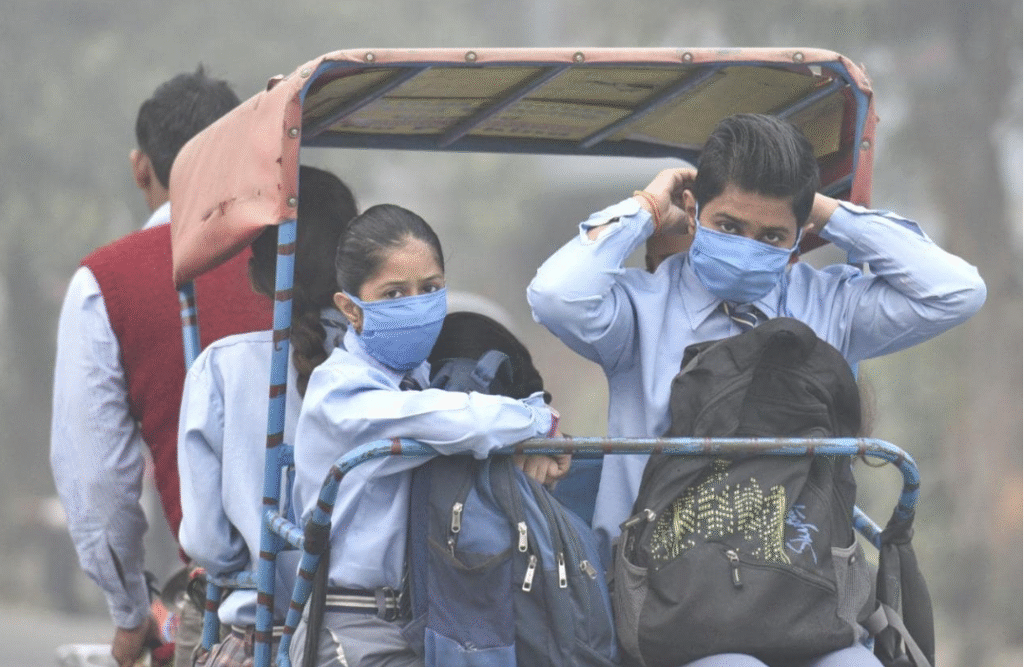
Air has turned into a commodity, and escaping suffocation is now a luxury. In the world’s most polluted capital, even breathing has become a form of inequality.
To understand the scale of this disparity, a study titled “Breathing Inequality: How India’s Poor Suffer the Most from Pollution,” published in the April 2025 issue of The International Journal of Innovative Science and Research Technology, provides insights into the widening pollution gap between India’s rich and poor. The journal states that South Delhi, presided by the affluent, has 10 times greener spaces per capita than the highly polluted and crowded areas of North-East Delhi, which is home to the economically weaker sections of the city. Subsequently, wards in North-East Delhi and East Delhi, characterised by high proportions of slums and low-income housing, show average annual PM2.5 levels of 100–120 µg/m³, exceeding WHO safe limits by tenfold. On the other hand, wealthier wards in South Delhi and New Delhi showed lower exposure, averaging 70–80 µg/m³ on account of the tree cover, fewer open waste sites, and regulated traffic.
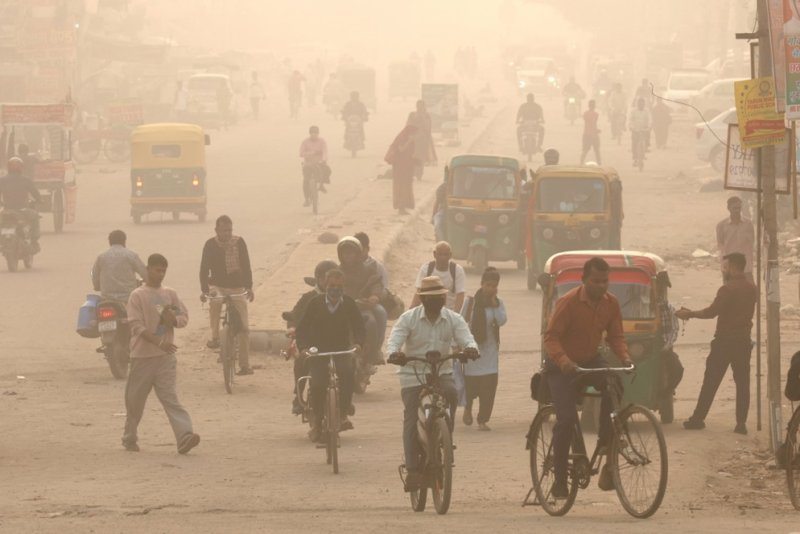
At the policy level, too, differences become visible. While the Delhi government is working towards bringing about new policies for the urban, upper-income category citizens, it conveniently neglects the ones affected by the hazardous environment the most. This gap becomes clearer when looking at how pollution shapes the daily lives of low-income workers. These marginalised workers in construction, transport, and waste management are over-exposed to toxic air daily. Household smoke (from biomass stoves) further worsens exposure to pollutants, creating a double burden of indoor and outdoor pollution. Moreover, as the government is shutting down more and more construction sites, on account of the rising pollution, numerous industrial daily-wage workers are being rendered unemployed. Further, as the schools are being mandated to shift to online modes, children from economically strained families do not have the means or the access to such resources. As a result, their education is compromised.
With no effective protection gears and now even lesser means of income and education, they have been the worst hit in this pollution crisis and yet their situation is hardly being discussed.
On the other hand, the high-income households are navigating this pollution crisis very differently. The majority of them are limiting outdoor activity and prioritising air circulation indoors with the help of air purifiers and air-purifying indoor plants like Areca Palm, Peace Lily, among others. Most corporate workers are opting for online, work-from-home alternatives; at the same time, students in schools and colleges are shifting to online lectures. While some families plan their vacations around the winter months to avoid the toxic pollution phase, others are leaving the city permanently due to the major health risks that arise from the high AQI levels.
The rising air pollution crisis in Delhi is reshaping the lifestyle choices of its residents, although its impact is far from equal. While some residents can shield themselves from the toxic atmosphere, with masks, purifiers, and even temporary relocation, others, with limited access to protective resources, find themselves choking on dust and poisonous air. It is disrupting the daily lives of the marginalised communities in various aspects, ranging from education to employment to health. The pollution crisis is not just about policy discussions and decisions, but how these policies need to be inclusive of all people belonging to different socio-economic backgrounds. Delhi’s pollution highlights not just environmental failure, but also a social one, where breathing clean air is a privilege, not a right.

This article was an eye opener for me. I always knew about the Delhi pollution, AQI levels and schools being shut stuff, but the new class divide!
I hope, this article rings a bell among policy makers too!