The Flanderization of Everything: The Death of Sitcom Characters (and The Birth of The Meme)
By Amour Shinde on November 4, 2026
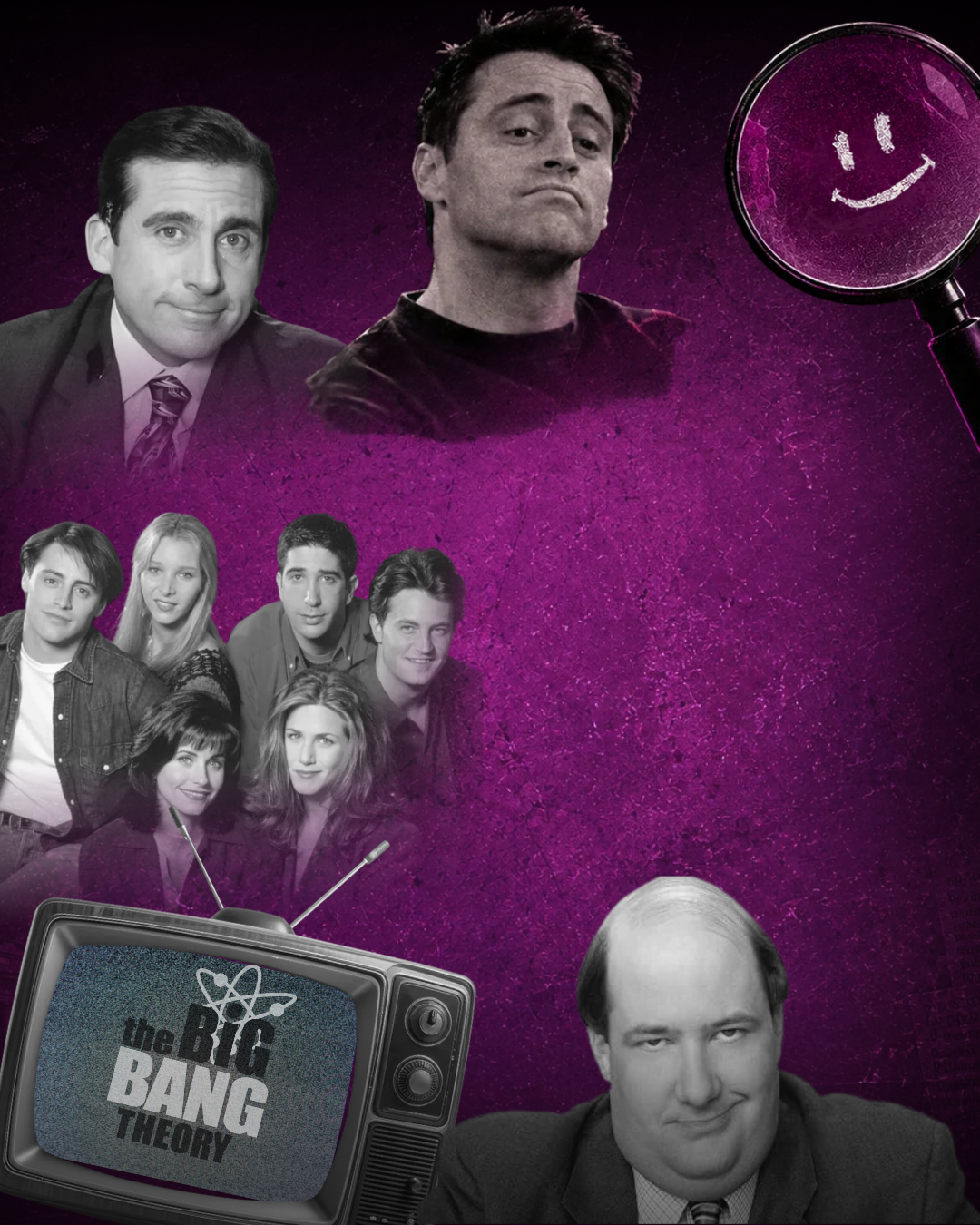
We have all grown up with the classic sitcoms: The Office, The Big Bang Theory, Friends, Brooklyn 99, etc. Even if you haven’t, I can guarantee that almost all of us now do have that one comfort watch that we vehemently exploit, day and night. During the first few watches, we enjoy the show, start getting attached to it, and genuinely hope to bond or relate to some select characters. Once we get past those initial watches, something human and natural inside of us starts paying attention to the smaller details. These details are what are absolutely worth exploring.
Think of Kevin Malone from The Office. Do you have an instant reaction? Of course, it might be anything from the chilli incident to his total incompetence in performing even the simplest of tasks. Similarly, consider the character Joey Tribbiani from Friends. Instantly, you might think of “How you doin’?”, his famously never-ending appetite, or his innocent lack of intelligence. Yet, how did it come to that?
Both characters are absolutely iconic, and extremely recognisable. Yet, how did it come to that?
Flanderization (coined as a term from The Simpsons) is one of TV sitcoms’ most cashed-in tools. It is the process of slowly but visibly capitalising on one single comedic trait of a character, normally a quirk that elicits the most laughs, and simply making it the person’s entire personality!
One might have noticed this in almost every sitcom. Complex characters that were quite hard to write and construct in the beginning almost overnight, or in this case over a season, start acting simplistic and caricaturish. Kevin Malone, our beloved bubbly and thickheaded accountant, once used to be a legitimate drummer of his own band and, well, a semi-competent man. To see him as a character is to see the rapid mental decline that the writers imposed on him to objectify his tiny quirk.
Another example is Joey Tribbiani from Friends. A genuine actor with a compassionate heart quickly transformed into a man-child playboy with less depth than a JK Rowling side character.
Sitcoms operate on repetition. Running jokes create familiarity, and that familiarity gives us the homely feeling that all of us occasionally crave. Exaggeration is intrinsic to comedy; they are naturally woven together, and hence this shouldn’t be such an issue. However, there is a thin line between making a character so utterly predictable that their jokes just write themselves. It seems, for lack of a better word, lazy. Repetition breeds comfort, repetition brings ease, but repetition never gives depth.
The character of Kevin Malone here offers a very interesting case study.
Just think about the classic scene in “Casual Friday” (Season 5, Episode 26). Kevin boasts about spending so many hours preparing the recipe for his family’s chilli, only to drop that huge pot in the middle of the office. It becomes “funny” when Kevin desperately tries to save all the chilli. However, it is comedic because Kevin has something serious about him, which he believes in: Kevin thinks he is a great chilli maker. It all stems from the dichotomy of watching someone fail at something they are so personally proud of. Sounds quite mean, but the entire selling point of this character is just blatant exploitation of his flaws.
But the scene has developed a life of its own within popular culture. It represents an example of spectacular failure, divorced from any background information on Kevin’s personality. Kevin’s love for cooking takes a backseat in light of how he crawls through spilt chilli. Actor Brian Baumgartner himself has noted how audiences split on the scene:
Baumgartner: “Half the people come up to me, and they’re like, ‘Dude, that is so hilarious, I love when you drop the chilli,’ and other people are like ‘I can’t watch it, it disturbs me. It’s so sad.’”
There is, however, an alternative view on this matter. Baumgartner has commented on Kevin’s development in terms of his growing familiarity with the documentary crew. The deteriorating characterisation might just be that of a character who is becoming more relaxed. This is crucial, because flanderization does not just mean whether a character becomes sillier, but whether there is room for anything else.
Baumgartner: “At the very beginning, Kevin was very, very nervous of the cameras being there, and as the cameras were there longer and longer, his childlike personality and unique charm were able to come out just a little bit more.”
Joey Tribbiani from Friends presents a subtler version of the same problem. The episode “The One Where Joey Speaks French” (Season 10, Episode 13) shows how hard it is for him to pronounce a French sentence when Phoebe is trying to teach him. The more ridiculous it gets, the funnier the scene is, and it embodies his inability to learn anything. However, the other side of Joey’s personality is illustrated in “The One Where Joey Tells Rachel” (Season 8, Episode 16). Joey expresses his love to Rachel, but she cannot return his feelings. Concerned about ruining their friendship, she gets a reassuring response from him. He says that they can still stay friends regardless of the fact that he is disappointed.
Two different versions of one character appear in one TV series. The problem is not in the authenticity of one of them and the inauthenticity of the other. The problem lies in the fact that the most exaggerated version is usually much easier to remember.
Our thriving internet culture eagerly embraces this simpleton and facile philosophy. People rewatch favourite episodes and come across the characters in short clips divorced from the plot. It is much easier to find the most over-the-top moments of a character than to find the episodes depicting emotional development. Social media does not create the process of flanderization; that credit, of course, goes to the writers’ room. However, it could intensify it. A writer tells a joke, readers recognise it; we spread it, and the repetition makes the unofficial biography of the character.
Maybe it is possible for a character to become culturally famous precisely because of the diminishing of their personality, their entire essence!
It is tempting to blame the writers entirely. Maybe the audience is flanderizing too? We indulge in such selective nostalgia that our favourite scenes start defining the entire character. Because networks cater directly to our demands, reducing them to caricatures and chasing cheap laughs becomes the only proven formula for sitcom success. And, honestly, it’s not entirely their fault.
On the brighter side, these memes and shorthands might actually end up exposing younger generations to older sitcoms. We can flatten a character, but we can also invite viewers to look closer. It depends on you whether you want to dig deeper.
In the end, perhaps the strangest fate a sitcom character can suffer from isn’t morphing into oblivion; it’s being remembered by one thing, the thing that was never supposed to be about them. The joke is preserved, the context is just mercilessly stripped away, and they’re just in a constant state of limbo.
Do we really want the punchline to eat the person?