
Through Society’s Eyes: What Maa Behen Reveals About the Position of Women Today
By Jiah D'souza on July 3, 2026
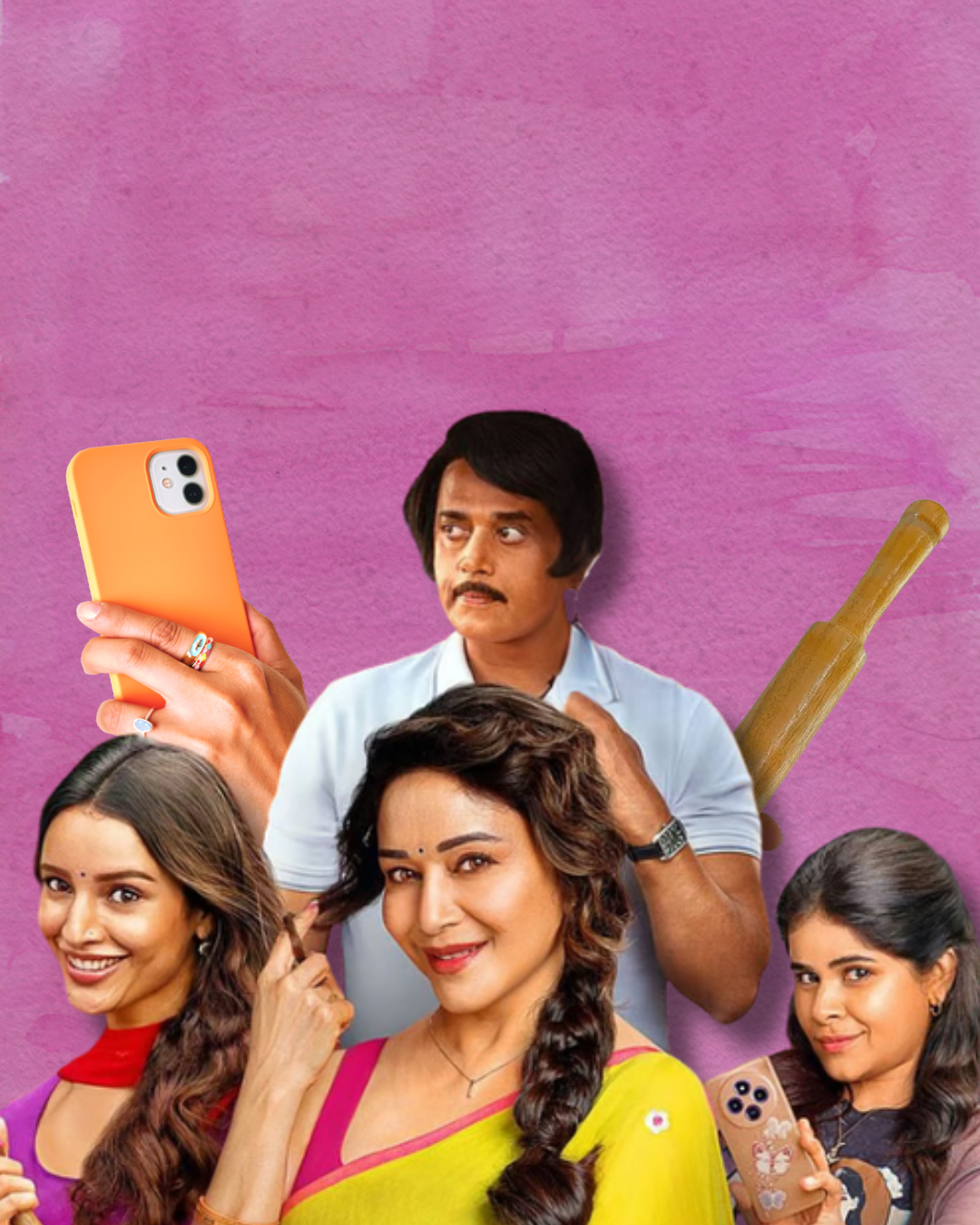
Over decades, women have pushed for equal opportunity in just about every walk of life; in schools, workplaces, political talk and public life. On paper, society has definitely gone far from the traditional gender roles that used to keep women mostly in the home. Yet, under that shiny progress, there’s this rough everyday truth that a lot of women keep bumping into: the weight of nonstop judgement. Women are always being watched, measured , and assessed for the choices they make, the clothes they decide on, the work routes they pursue, and even the way they speak. It’s that kind of tug between advancement and prejudice that Netflix’s Maa Behen tries to explore.
Directed by Suresh Triveni, Maa Behen is a dark comedy with bits of crime and family drama, all of it together. The story revolves around a widowed mother, Rekha and her two daughters, Jaya and Sushma, whose lives suddenly go off-rail when they end up trapped in an unexpected situation.
Even with that tangled pile of secrets, silly misunderstandings, and the chaos that keeps getting bigger and bigger, Maa Behen somehow feels less focused on the plot itself, and more on what it uncovers about the women inside all that mess. Underneath the laughs there’s a sharp little critique about how society looks at women, labels them, and too often scrutinises them like it’s entertainment.
One of the standout things in Maa Behen is the way it portrays women through the perspective of the world, not just through the characters alone. The world has made its presumptions; it has scrutinised and judged these women and their choices long before we, as an audience, have a chance to get acquainted with them or the lives they live. Their identities are largely defined by gossip, assumptions, and expectations.
The film also highlights another reality of patriarchal societies: the burden of respectability. Women are frequently treated as representatives of their family’s honour. A woman’s acts have never been considered an outcome of her own free will; instead, they have always been thought to bear the values around them. This creates immense pressure to behave according to social expectations, even when those expectations are unfair or outdated.
Another theme reflected in Maa Behen is emotional labour. Across cultures, women’s role usually appears to be a combination of a caretaker, peacemaker, and a shoulder to lean on and vent to. Women are told to mediate arguments, tend relationships, and put everyone before themselves. These roles are taken as such a given that they pass unremarked.
This burden is beautifully articulated in the mother-daughter bonds portrayed in this movie. Be it Rekha being ridiculed or shamed by her own neighbours, because she didn’t fit the ideal ‘housewife’ image; or Sushma being character assassinated for being a part of a vulgar video on the internet even though she didn’t post it; or Jaya being taken for granted in her house and being considered as someone who’s just there to cook and be responsible for the household chores.
The most significant observation that the film conveys is that any notion of freedom attached to women often comes with conditions. Modern society applauds the idea of the ‘empowered woman,’ but only up to a point. Women are urged to obtain education as well as achieve great task objectives, yet they are compelled to be palatable, agreeable and a socially acceptable human being.
This contradiction can be seen in daily life. Women are praised for becoming financially independent, but blamed for choosing work over a spouse; lauded for ambitions but ostracised when it becomes a source of discomfort.
What Maa Behen is able to pull off effectively, without giving the audience fiery speeches and rallying cries, is the subtle exploration of such women-centric themes using humour, family dynamics and social settings to mock these judgements.
The film understands that patriarchy keeps presenting itself in the smallest of things, in casual words, implied judgements, and assumptions that have been deeply ingrained in day-to-day life. Like Jaya’s father in law, only demanding her to do household chores or Rekha being portrayed as a cunning woman who seeks to ‘steal’ her neighbour’s husband, without anyone listening to her side of the story and simply believing the rumour that was started by the said ‘husband’ himself. There is often a tendency for society to give greater weight to the man’s perspective, which may contribute to women being perceived less favourably. Most women are directly affected by this, but that is one notion this film challenges. All three of the women in the film know exactly what society thinks of them, and yet they choose to live their lives according to their own will.
Director Suresh Triveni has spoken about the importance of conversations that the movie promotes and that viewers shouldn’t disregard as a mere entertainment piece. The notion is apparent throughout the storyline, which seems to test the quickness with which the viewers tend to judge other people, primarily women.
The element that lingered with me the most after viewing it, far more so than the intrigue or the witty remarks, was the painful recognition of the judgments hurled at the female leads; they may have occurred in a fictional context, yet the film made clear these are real judgments many women are subjected to daily. We see the female characters constantly being judged in some aspect or the other. Even in modern households, where women work and contribute financially, most of the domestic and emotional labour still seems to be on them. The film is a reminder that while society has undoubtedly made some progress, equality can not just be settled by laws or by ‘equal opportunity’ and representation alone. Real equality also asks for freedom from constant judgment and the ability to exist as a person, not a token, or even a symbol that’s stuck carrying everyone else’s social expectations.
Ultimately, Maa Behen is more than just another dark comedy; it’s a window into the harsh realities that women are still facing today in this modern digital, 21st-century world. Through its various characters and the way in which their story unfolds, the film peels through the modern facade of progress and showcases how patriarchy still exists, invisibly, like roots of a massive banyan tree buried deep within our systems. Until women are not viewed solely based on their role in the patriarchal society but are embraced as who they are, the story of gender equality isn’t truly told.

beautifully observed and put into words.