The Booth and the Ballot: “India Doesn’t Vote For. It Votes Against.”
By Maddukuri Hitasree on May 10, 2026
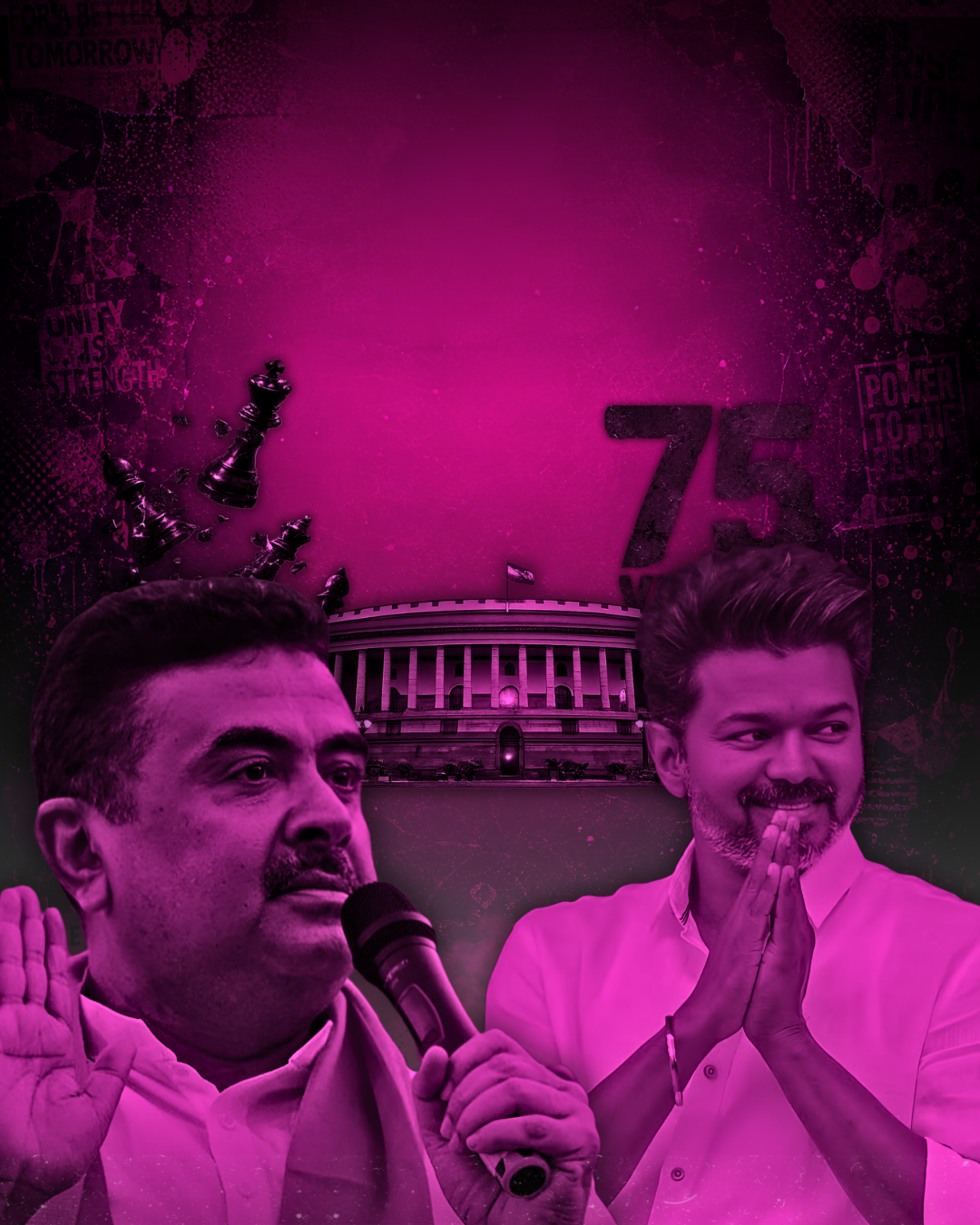
It’s that time of the year again, the same fervour in the air- all people gathered around the town, all celebrating a sense of achievement, a 75-year-old man who promises to bring gifts, the naughty and the nice list, excluding people from voting.
Well, you guessed it: it’s the customary ‘chunav ka mausam’ for several state legislative assemblies in India, not Christmas. Well, it might as well be Christmas coming early for many political parties that saw historic, sweeping results in their respective constituencies.
Let’s unwrap this gift together.
The theme for this party has been made painfully (in the case of the ruling parties) clear: anti- incumbency. The respective states of West Bengal, Tamil Nadu, and Kerala saw a historic change of government with overwhelming results.
Whereas the state of Assam is an exception, with the BJP retaining power for the third time in a row, consolidating Himanta Biswa Sarma’s grip and confirming the complete collapse of Congress as a credible opposition force in India’s northeast.
The state of West Bengal celebrates its first right-wing electoral victory since 1937. BJP’s Bengal victory is statistically too sweeping to be explained by SIR-related voter exclusions alone — the margins suggest a genuine anti-incumbency wave against fifteen years of TMC rule. Yet the SIR controversy may have demoralised minority voters into abstention, converting a probable BJP win into a historic rout.
There is much to celebrate even in the state of Kerala. Congress-led UDF’s reclamation of Kerala ends the LDF’s decade-long hold on the state, securing 102 seats — its most commanding mandate since 1977, a gap of nearly five decades. The victory is doubly historic: it marks the first time in fifty years that no Communist party governs any Indian state, effectively extinguishing the last redoubt of electoral Marxism in India.
However, the electoral victory in Tamil Nadu has been quite the spectacle, almost cinematic to some effect. Actor-politician Vijay’s TVK, formed barely a year before the election, shattered fifty-nine years of unbroken DMK-AIADMK dominance in Tamil Nadu. The result produced the state’s first-ever hung assembly, signalling not merely a change of government but the structural collapse of Dravidian identity politics as Tamil Nadu’s organising electoral logic.
All the above trends and striking poll results underscore one central argument: Indian voters are rejecting stagnant governance and demanding genuine results, moving away from handouts and empty promises, particularly evident in Kerala and West Bengal.
This anti-incumbency trend signals hope that the public is focusing on real metrics—employment, safety, accountability—when voting. Yet, acknowledging that identity politics and majoritarianism may also influence outcomes, we must not naïvely assume a pure desire for justice drives exceptional results.
However, it feels new to feel and carry this hope. There is only a wave of constant nihilism and despondency as the cries for justice have become long forgotten, and the public has been reduced to passive masses failing to recognise the hegemonic imbalances. This jostle of action by the public feels like a reminder that India has not yet wavered from its democratic roots, and it still has some fight left in it.
Only time can tell us if these results will actually deliver all the promises of accountability and restoration of justice. We as citizens have exceptionally done our part in electing our representatives; the burden lies upon the elected to prove the worth of their every promise.
The ballot has spoken — loudly, historically, and with unmistakable impatience. But democracy does not end on counting day. It merely changes hands. The real test begins now, in the unglamorous machinery of governance. India has voted against. The harder question is whether those voted in will give it something, finally, to vote for.