A System Built to Forget People: The Machinery of ICE
By Aadrita Nandi on February 25, 2026
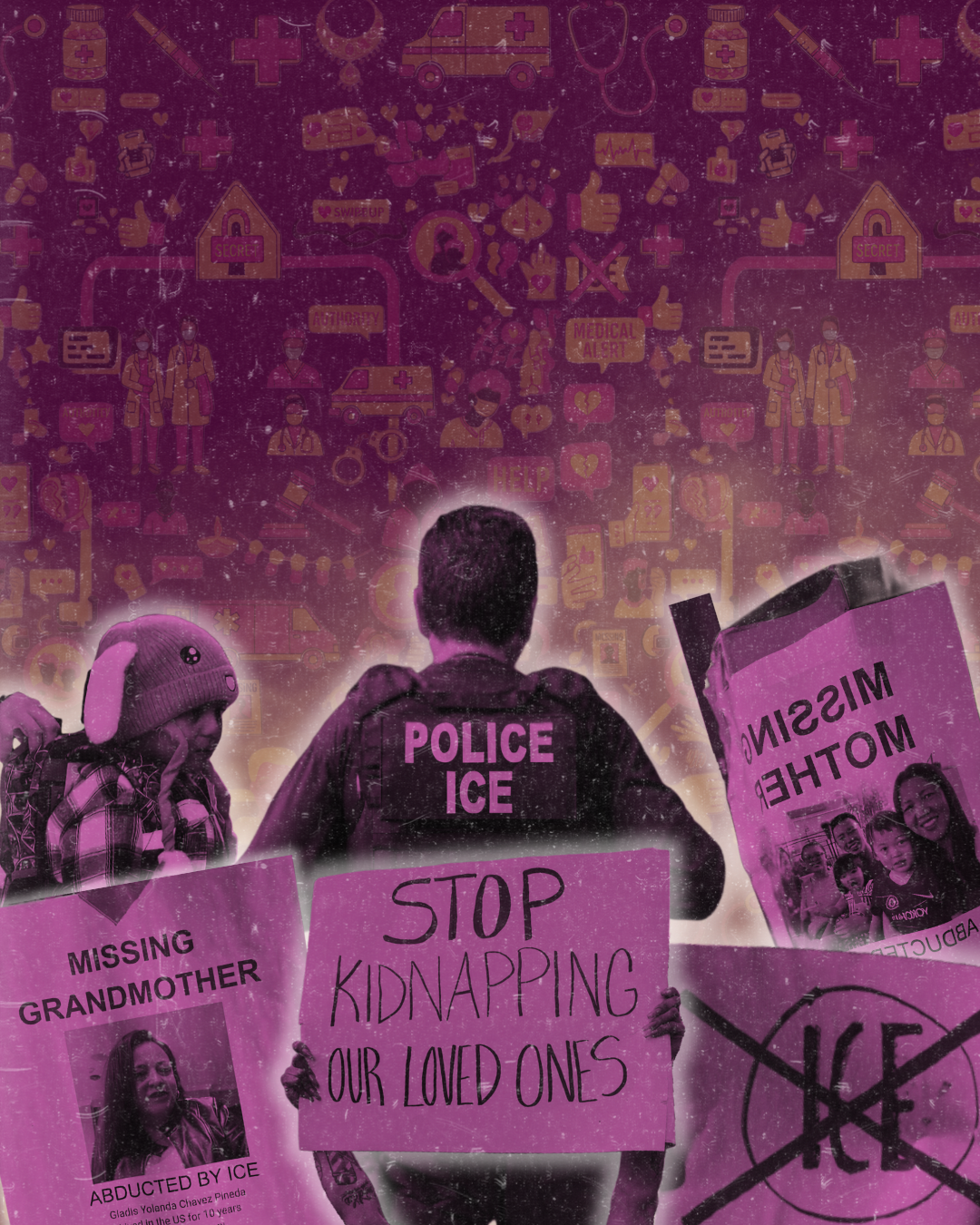
At 3:12 a.m., he was transferred from one detention facility to another.
If you open the government record, that moment appears clean and controlled: a recorded time, a new location, and a line confirming a transfer. What the record leaves out is his earlier request for medical attention, his family’s hope that he might finally come home, and their confusion when he suddenly vanished into another state.
A few days later, he was dead.
He is not alone. As of now, 32 people have died in ICE custody in recent years. Thirty-two lives that ended inside facilities funded by the federal government. Thirty-two internal reviews. Thirty-two moments that briefly surface, spark outrage, and then dissolve back into paperwork. To understand how something like that happens without shaking the entire country, you have to understand what ICE actually is, how it was established, and how it evolved into what it is now.
ICE, short for Immigration and Customs Enforcement, was created in 2003 after the September 11 attacks. Back then, the U.S. government reshuffled itself in the name of national security. Immigration enforcement, which used to be handled by a different agency, was placed inside a brand new department focused on “homeland security.” Immigration was no longer treated mainly as paperwork or visa issues. It was folded into the language of security and threat prevention. That shift changed everything.
Over the next two decades, ICE grew. Its budget, power and detention system grew. What started as a restructuring turned into a massive network of detention centres across the country. Not just at the border, but in small towns, rural counties, and private prisons scattered far away from the public view. On any given day now, tens of thousands of people are locked inside ICE facilities. Here’s something many people don’t realise: most of those people are not serving criminal sentences for immigration violations. Immigration detention is technically “civil,” which means the government is holding people while it decides whether they can stay in the country.
But if you ask someone inside one of those facilities whether it feels “civil,” you’ll get a different answer.
People detained, sleep in cells or crowded dorms. Their movements are restricted, calls home are limited and expensive. They wait months for hearings. Some do not have lawyers because, unlike in criminal court, the government does not automatically provide them with one. Imagine trying to argue your case in a foreign legal system, in a language that’s not yours, from inside a locked facility. That is the reality for tens of thousands of people right now.
Some are eligible to ask for release while their case moves forward. Others are not, simply because of how the law is written. For them, detention is automatic. No individual decision about whether they are actually dangerous.
And then there are the transfers. ICE can move people from one facility to another whenever and however it chooses. That means someone picked up in New York might suddenly be sent to Louisiana. Someone in California could wake up on a bus to Texas. Families often find out after the incident already happened. Lawyers lose track of clients, phone numbers change, and court locations change. Everything resets in a blink.
Picture trying to defend yourself in court while the ground keeps shifting under your feet. Now add something else to that picture: deaths.
Thirty-two people. Some reportedly complained of medical issues before their conditions worsened. Some were waiting on court decisions. Some were fathers, sons, mothers, daughters. ICE says it investigates every death and takes health and safety seriously. But this is not the first time concerns about medical care in detention have surfaced. Reports over the years have pointed to delayed treatment, staffing shortages, and inadequate care in some facilities. The pattern just keeps on repeating.
This is why student protests have erupted across the country. Young people are looking at this system and asking a simple question: how did we get used to this? How can people just be detained after a knock on their doors on a pleasant morning? How did it become normal for tens of thousands of people to be locked up under immigration authority, often without guaranteed lawyers, far from their families in facilities run by private prison companies? How did detention become something else entirely instead of being an emergency measure?
The truth is, ICE did not become this powerful overnight. It expanded quietly through funding bills, contracts, and most importantly, through political rhetoric about security. Through years of treating immigration as a crisis that demands more enforcement, more beds, and more capacity. And once something becomes a part of a policy, it stops feeling temporary. That is the real danger here. Not just individual tragedies, but normalisation as if it’s part of a routine. ICE is not some hidden agency operating in secret basements. It is funded by taxpayers, and it answers to elected officials. It exists because laws were written for it and budgets were approved.
Which means this system belongs to the public. And if people are dying inside it, if families are being separated by cross-country transfers, if thousands are sitting in detention without lawyers trying to fight complicated cases alone, then the question is not whether ICE is “doing its job.” The question is whether this is the kind of system we are willing to accept as normal. Because once a country gets comfortable with mass civil detention, once it shrugs at midnight transfers and delayed medical care, and once it reduces human beings to bed counts and case numbers, it becomes easier to look away.
A system built in the name of security has become a system built on enforcement. And sudden enforcement, when it goes unquestioned, has a way of swallowing people whole.