
The Trial of a Victim: Life after Conviction
By Nihira Pillai on January 14, 2026
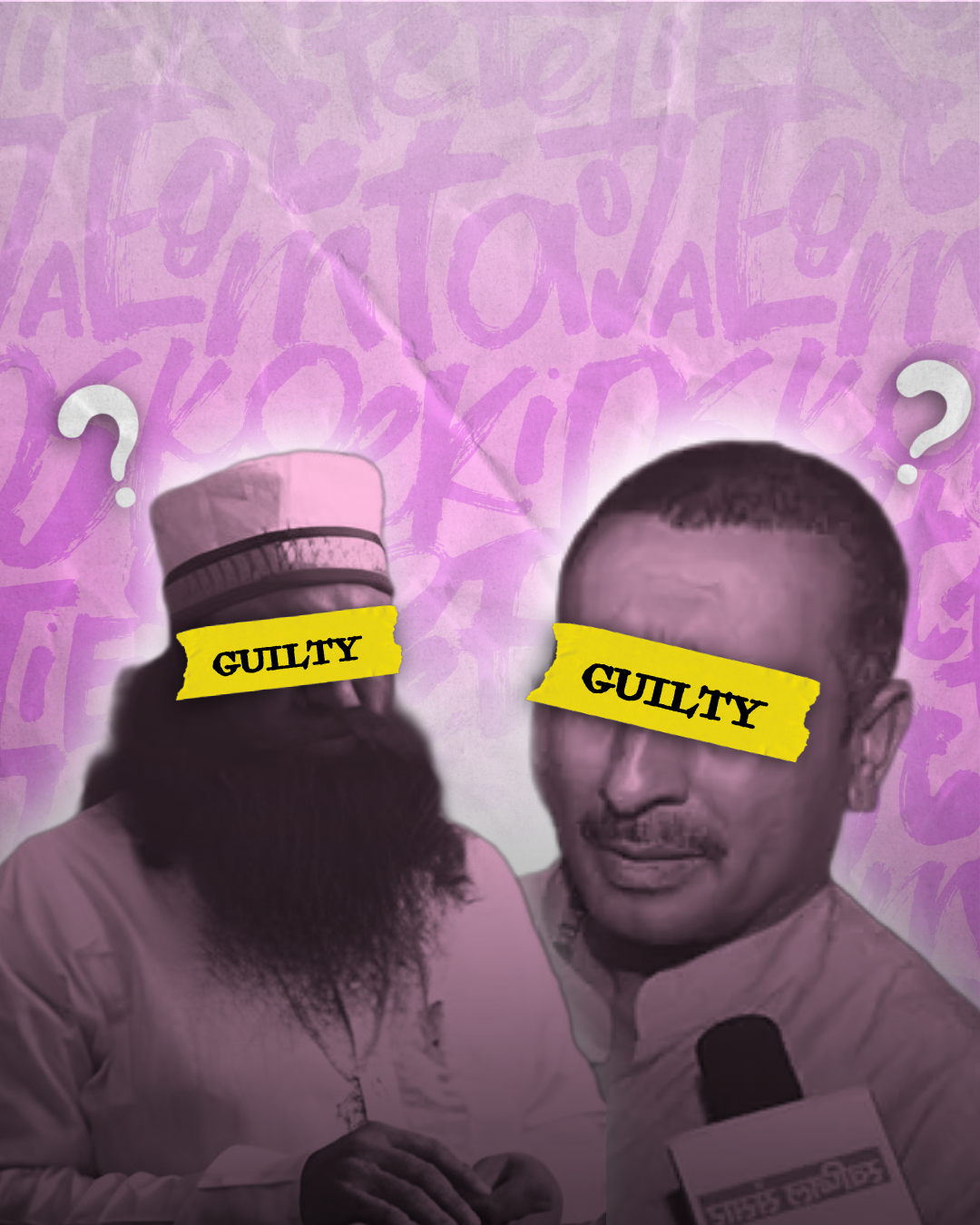
India’s judicial system stands at a moment of reckoning. On December 29, 2025, the Supreme Court stayed the suspension of Kuldeep Sengar’s life sentence after the Unnao survivor returned to the streets of Delhi to protest. Six years after conviction, justice once again required visibility, noise, and exhaustion from the very person it was meant to protect.
The case is distressing. A seventeen-year-old girl from Unnao, Uttar Pradesh, was allegedly raped by Kuldeep Sengar, a sitting MLA, on June 4, 2017. When local police refused to file an FIR, she attempted self-immolation outside the Chief Minister’s residence.
While Sengar was still in custody, the survivor faced a series of traumatic incidents. Her father was arrested on false charges and beaten to death in police custody. In 2019, the survivor met with a suspicious car accident wherein a truck with a blackened license plate rammed into the car carrying the survivor, her lawyer, and two aunts. Both her aunts were killed, leaving the victim and her lawyer in critical condition, who later succumbed to his injuries. Since the case began in 2017, the trial has cost her 5 people from her life, including her lawyer, her two aunts, her father and her grandmother, who reportedly died of shock.
“I am fighting the case alone, because I am the only one left to fight,” she said, in an interview with The Quint.
For nine long years, the Unnao survivor has been battling for justice. First, for her case to be heard, then for the accused to be convicted, and yet again, for justice to prevail. Her life has become a constant battle caught between the pursuit of justice and the political power play denying her access to it.
This is not the first time the judicial system has cut slack to a convict having regional political power.
The same week the Delhi HC granted Sengar bail, Baba Gurmeet Ram Rahim Singh, leader of DSS, received his 15th parole from a 20-year sentence for rape convictions.
In 2019, this self-claimed godman was also proven guilty of having murdered a journalist sixteen years ago. Ram Chander Chhatrapati ran a local Hindi newspaper, Poora Sach (The Whole Truth), which published an anonymous letter in 2002 and exposed instances of rape, exploitation and forceful castration of nearly 400 followers at the DSS. Chattrapati was shot outside his house, and in 2019, Singh and three others were convicted and sentenced to life imprisonment for his murder.
On August 25 2017, Singh arrived in court in a 200-car cavalcade from Sirsa to Panchkula in Haryana. He had been accorded Z-plus security, reserved for prominent politicians as the highest level of official protection.
While victims face threats, their families and witnesses are intimidated or even killed, the state accords its highest levels of protection to the perpetrators instead of those who actually need it. For the convicts, a bail or parole is a relief from the consequences of their crime, but for the victims, it’s not just a reversal of justice, but also an added threat to their lives. The victims face terror even after their accused are convicted and sent to jail because verdicts are never final for survivors when the convict retains regional political power.
On 2 June 2020, Manu Sharma, the accused convicted of murdering Jessica Lal, was released from Tihar Jail by the Delhi Lieutenant Governor on the grounds of good behaviour. Jessica Lal was a model in New Delhi who was working as a celebrity barmaid at a crowded socialite party when she was shot dead at around 2:00 am on 30 April 1999. Dozens of witnesses pointed to Siddharth Vashisht, also known as Manu Sharma, the son of Venod Sharma, a wealthy and influential Member of Parliament from Haryana, as the murderer. Manu Sharma was later convicted of the murder and sentenced to life. However, in 2020, Sharma was out on bail because of the order of Delhi’s LG on the grounds of good behaviour.
It is more tedious and painful for the victims to seek justice than the crime itself. Granting bail, or parole, or even reducing the sentence of a convict, especially if they hail from political prowess, does not justify their wrongdoings; rather, it significantly puts the safety of the victims in jeopardy.
Often when such powerful convicts are out of jail they threaten and cause harm to the victims and their families in order to seek revenge. As a result, they live in constant fear of reprisal from those in power, simply for holding them accountable for their wrongful actions.
When we claim that the judicial system is equal for all, we fail to recognise that it has never been a level playing field. Those backed by political power hold an edge, a procedural one.
The pressing issue is that this doesn’t happen overnight, but in the waking awareness of the entire nation. A 2024 report released by the Association for Democratic Reforms states that fifteen MPs and 135 MLAs have declared that they have cases related to crimes against women registered against them. The charges include repeated offences against the same victim, further underscoring the gravity of these cases, it said.
We have entrusted the responsibility of the nation into the hands of MLAs and MPs who abuse their power to excuse themselves from the consequences of their misdeeds. This is no secret, it’s out there in the public, and yet, we continue to neglect the obvious. Until, of course, there is a horrifying incident that causes an uproar amongst the public, forcing them to come out on the streets and protest against a system that repeatedly extends leniency to convicts who wield regional or national political influence.
So, what happens when lawmakers refute the law? The victims suffer the same fate as the criminals, as is the present situation. By allowing powerful men to treat the judiciary as a revolving door by granting them bail on the grounds of political reputation or medical comfort, or good behaviour, the administration sends a chilling message- the safety of its citizens comes secondary to the status of its politicians. For a democracy to survive, the law must be a ceiling that no one can rise above and a floor that no one can fall through. We do not just need faster trials; we need a system that does not differentiate between a criminal and a criminal backed by political power.

Its chilling. More disturbing.
It is a misuse of the power given to political leaders by the people. It seems as if they can easily manipulate the law just because they have a political standing and it seems to work for most of the cases and what’s even disgusting is that some people still follow these disgusting personalities .