DC Was Built to Matter. Netflix Was Built to Move On. What does Netflix’s bid for Warner Bros. mean for DC’s legacy superheroes?
By Tanushka Rathore on January 11, 2026
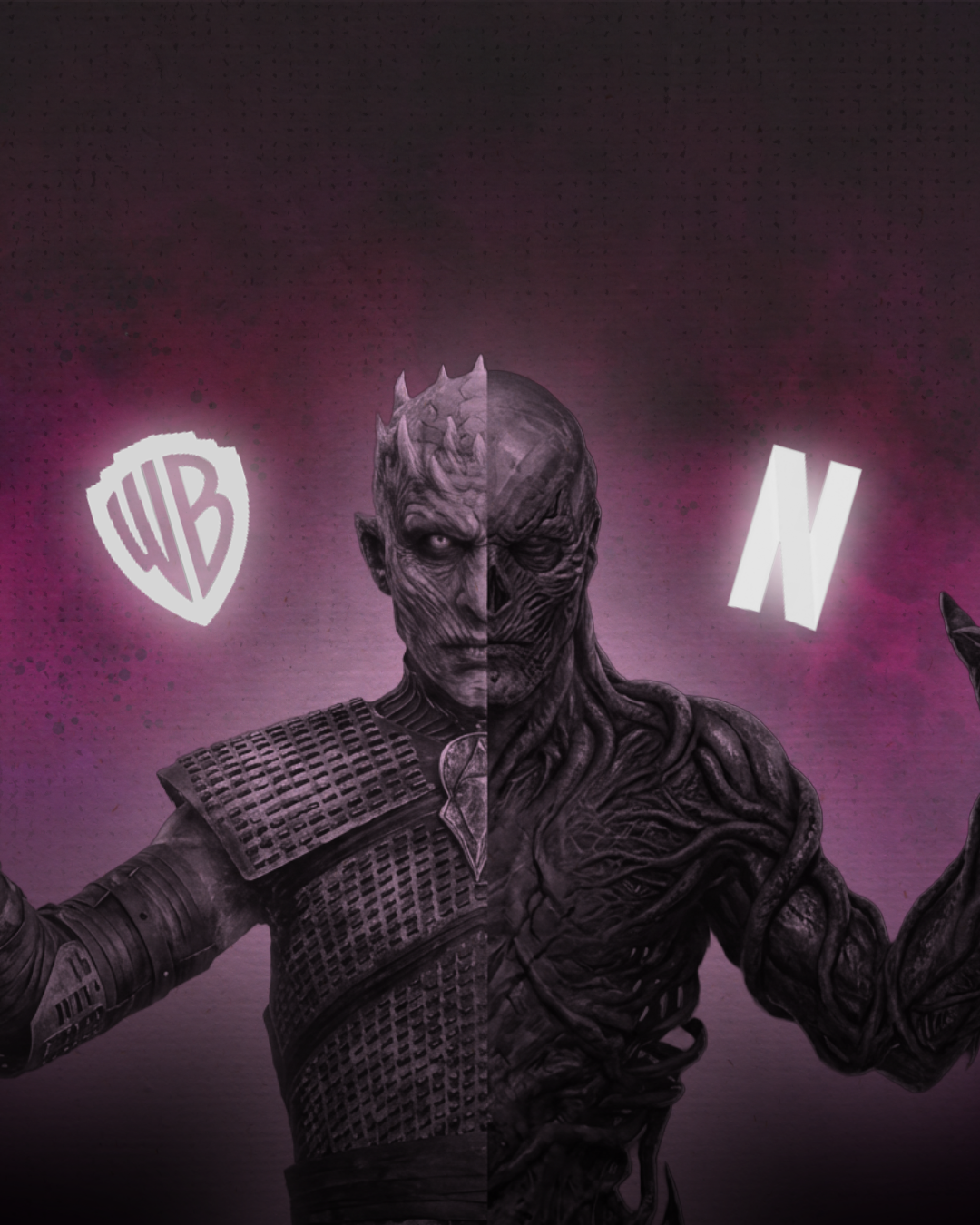
Batman guards Gotham and Superman the skies, but will they be protected from the ticking clock, that is the Netflix acquisition of Warner Bros? Let me explain how the legacy of some of the world’s most loved superheroes now threatens to fade in a content war raging in boardrooms. This war aims only to increase efficiency. What does it matter that the galaxy’s finest fight for justice when their iconic stories are reduced to screen clicks?
For years now, DC has built a fandom, a legacy, dare I say- quite sentimentally so- a family. But one must get this straight, that if this deal were to happen (which it is), DC won’t just change hands, or studios. It will change the logic and the very concept it works on.
You see, Netflix doesn’t acquire companies to build a legacy or preserve its image; it does so to absorb their libraries, adopt the content they bring, and make it work inside a machine that prioritises views and clicks. Warner Bros., on the other hand, for all its chaos, still plays the long game, which does not depend on instant gratification. It works on franchise, long arcs, cultural memory and sentiments, the idea that things are worth holding onto even if they do not immediately trend, hence DC, by extension, also belongs to this older worldview. Netflix does not, not at all.
This is where the issue and anxiety lie: on Netflix, the content is not sacred; it is conditional. Lord knows the number of times heartwarming and loved sitcoms have vanished (causing frequent internet-wide meltdowns), Friends, arguably one of the most loved sitcoms of all time, left Netflix USA in 2020, as did another fan favourite show, Brooklyn 99, where multiple seasons were pulled out due to licensing charges. It’s a stark reminder that attachment to the most loved characters is also temporary, and permanence was never part of the Netflix subscription. Emotional attachment is indeed encouraged – but for a short time. Cancellation isn’t failure, it’s optimisation. The platform plays on its strength, and that lies in volume, not longevity. Stone cold? Perhaps. Profitable? Absolutely.
Now, I implore you all to imagine this concept applied to DC – indeed, a difficult task, so I’ll unlock a new character for the plot – James Gunn, to those unknown – is a filmmaker who made his name turning Marvel’s Guardians of the Galaxy, from a niche comic to a popular and emotionally driven blockbuster franchise. In late 2022, Warner Bros. handed him the keys to DC Studio to oversee film and television projects, and while the studio changes ownership, I happily report that Gunn remains in the same position. But, here is why his presence matters so much in this conversation, because when Netflix takes over, Fan backlash or superhero fatigue won’t be his biggest problems anymore, it would be protecting coherence in a system that doesn’t value waiting – an asset deemed by any measure.
Gunn and, by extension, DC represent structure, and Netflix represents speed. That tension is the real struggle.
As it remains, Netflix does not need DC to be iconic – it needs DC to be productive. Batman doesn’t need to be mythic; Superman does not need cultural recognition. They need to perform and retain their roles. And god forbid, if they flop? Unlike franchise defending their movies, on Netflix, they will be quietly replaced by something in the same IP bucket.
Allow me to demonstrate, taking Batman for example. Instead of being a long-form cinematic myth, imagine it as a Netflix series (the blasphemy, I know). Season one drops in a buzz, a viral opening week, a darker, more engaging Gotham. By season two, the algorithm demands escalation: a new villain and a higher shock value. By season three, retention dips, and suddenly Bruce Wayne’s trauma needs a twist, a multiverse variant, or a surprise death to juice engagement. And if in the end all that doesn’t work, the show isn’t allowed to fail publicly, it’s quietly cancelled or rebooted. Once something like that happens, Batman, once a character who aged with audiences across decades, becomes disposable, and his presence is considered endlessly restartable. The problem isn’t that Netflix would ruin Batman outright; it’s just that under a system built for speed, even icons are denied the right to grow slowly, to stumble, or to sit with consequence. In this model, Gotham doesn’t get the chance to evolve. It keeps refreshing and resetting.
For audiences, especially Gen Z, this is not an unimaginable case of Doomsday. They aren’t new to this. OTT platforms have cancelled original series produced by them multiple times as well, from The Recruit, headlined by Noah Centineo, to Chilling Adventures of Sabrina, series with loyal fanbases get discarded with a snap of the fingers. This exact thing is DC’s Kryptonite – Disposability. In DC, characters aren’t just mere content units; they carry emotional weight, and they are inherited symbols. The debate on their superiority over each other still exists because people remember them, and they matter – the past matters. And no, I don’t say Netflix erases the past, it just doesn’t prioritise it, and that is an eminent death as unfortunate as that is.
And so I bring you all to the question that matters maybe the most of all: if Netflix takes over Warner Bros., does DC finally stabilise under one dominant platform, or does it lose the very thing that makes it worth stabilising? Because, and do hear me out, productivity does not always kill creativity loudly with a bang, you won’t see DC fans storm the Netflix building or anything like it, you see, modern power doesn’t work that way, it’s cleaner and way more efficient. DC won’t be ruined – it would be optimised.
The messiness that once made its character feel mythic but still close to the heart would be sanded down to something cleaner- bingeable, aka more replaceable and way easier to move on. Stories won’t be allowed to fail publicly or even fight for relevance. They’d simply disappear in the endless scroll of “what’s next?”.
And that’s the real cost of consolidation that no press release will mention. Not fewer movies. Not worse writing either. But the slow erosion of consequence. For where every story is renewable and every universe resettable, nothing is allowed to linger long enough to mean anything emotionally or otherwise.
DC doesn’t need rebranding. It needs conviction, and conviction doesn’t survive in systems built only for endless churn.
Because spectacle will always bring the clicks. Announcements will always trend. Fresh starts will always sound exciting. The fast-paced social media indeed has ensured that. But alas, in the long run, it’s accountability to stories, to audiences and to memory that decides which universes endure and which ones become content graveyards used as bad examples.
And hence I leave you all with just one conclusive thought – If Netflix buys Warner Bros., DC won’t lose its heroes, it’ll lose the right to grow old with them.
And if I know anything at all about evolution and content, I know this -that’s not evolution, that’s just erasure with better branding.