
What If segment- If Bollywood and Social Media Knowledge Men Came Into Politics
By Biware on January 4, 2026
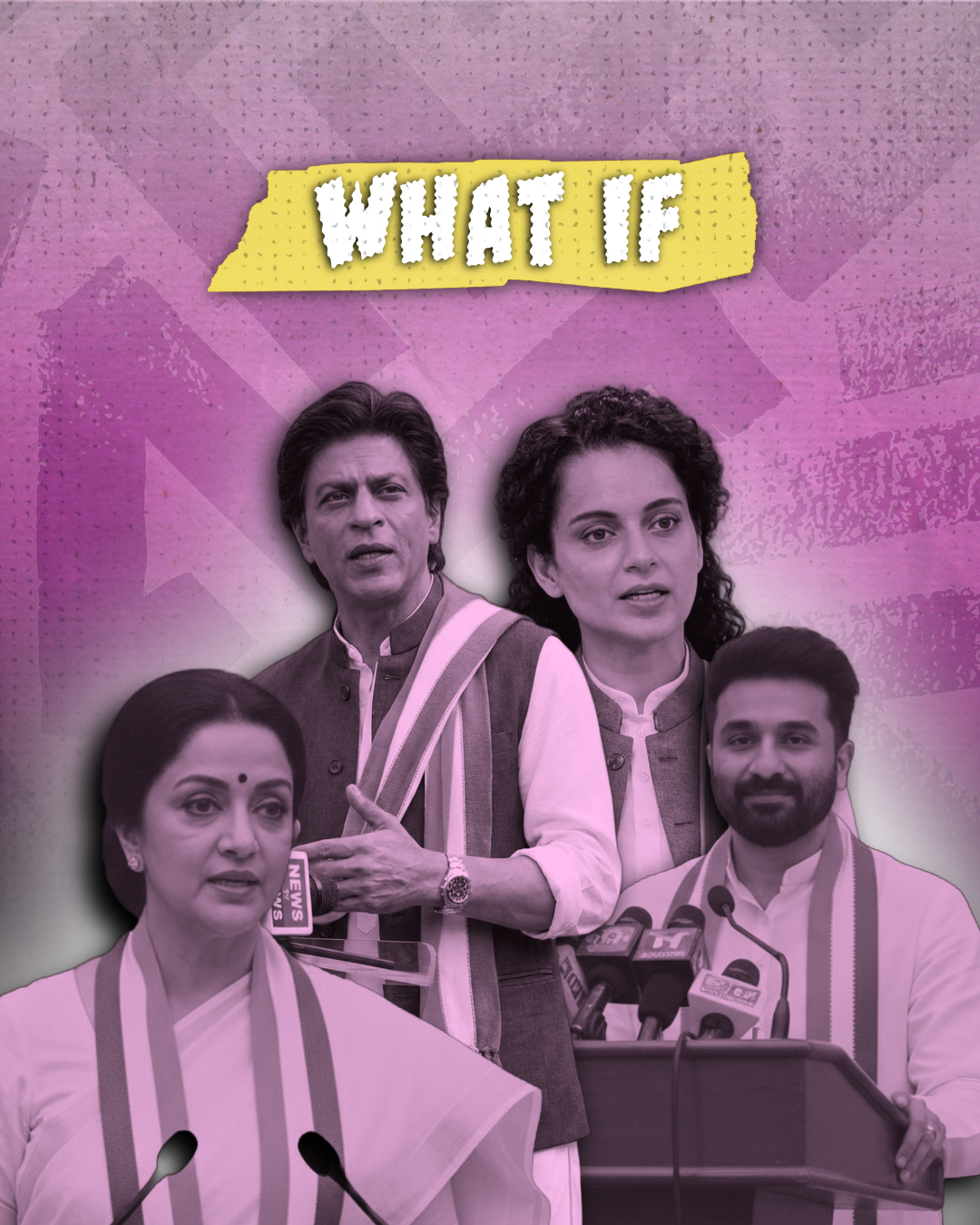
Bollywood celebrities and social media influencers are often dismissed as publicity-seekers when they enter politics, their involvement is often dismissed as a tactic for vote banks and popularity rather than genuine change. However, if we imagine a scenario where prominent figures like Javed Akhtar, Vir Das, and Aamir Khan continue their artistic pursuits while engaging in politics, we can better explore potential benefits. For example, Javed Akhtar’s Rajya Sabha tenure (2010-2016) was a rare case of such a crossover. By considering their hypothetical entry into politics, we can examine whether their public influence could address some national issues more effectively.
A central question emerges: how can writers, actors, or comedians meaningfully aid the country’s challenges if they join politics? Historically, these individuals have faced controversies and restrictions on their freedom of expression due to socio-political pressures. For instance, Shah Rukh Khan had to be cautious with his words during the AIB podcast to avoid misinterpretation. Yet, some, like Aamir Khan, have worked to address national problems outside formal politics—his Paani Foundation tackled drought and highlighted hidden stories of resilience. Meanwhile, Vir Das faced backlash for expressing complex national realities, sparking debates about patriotism and freedom of speech. Despite criticism, international engagement and performances by figures like Vir Das have arguably shaped perceptions of India in important ways. These examples show the nuanced roles public figures navigate, highlighting both the potential impact and the risks they face.
But why do these personalities hesitate immensely to enter politics? They can, if given power, easily reshape and change the country for the better and according to the YouGov-Mint-CPR survey, 65% people believe this. The answer to this is very simple. Known faces like Jaya Bachchan, Kangana Ranaut, Hema Malini, Ravi Kishan, and Shatrughan Sinha are still holding their respective positions in political parties. But as they entered into the utter chaos of corruption, verbal fights, meaningless debates and betrayals, their unique feature was nowhere to be seen, which was their industry talent, their ability to be seen and felt by people, their creativity and their unique feature. It was pressured down by the sharp words of politicians, time was bound forever because of the constant problems of the country and set aside to entertain foolish arguments and non-developmental speeches in their laps. This is exactly what the others are scared of. Javed Akhtar has repeatedly refused to join formal politics, saying that his autonomy and freedom of expression matter too much to be tied to a single party. However, instead of respecting this stance as a choice rooted in independence, he has often been criticised for it. This helps explain why figures like Vir Das, Aamir Khan, and Javed Akhtar refuse to narrow their ideology for systems critics say operate on arbitrary markers like appearance and offer little transparency in how public money is spent.
A recent example is actor Vijay Thalapathy, who announced his retirement from cinema before entering politics. His decision shows a larger reality: active political participation often demands complete commitment, leaving little room for parallel creative careers. After more than three decades in the film industry, his move suggests that politics is rarely something one can pursue without placing other professional pursuits on hold. It is not just him, as mentioned, Kangana Ranaut, Jaya Bachchan, and Ravi Kishan’s work is barely to be seen anywhere because of the frenetic workload of politics. Amitabh Bachchan, on many occasions, has stated that he left his position as an MP for Prayagaj because he felt that his work as an actor was getting deferred by him to focus on the daily crisis of parliament.
While these examples explain the hesitation and trade-offs involved, they also invite a larger question: what could politics look like if creative voices were able to participate without being consumed by the system? In this fictional scenario, let’s imagine the specific national benefits if prominent entertainment and social media figures took on key political roles. For example, Aamir Khan as Chief Election Commissioner could use his reputation for fairness and social awareness to combat electoral fraud and enhance democracy. Similarly, Vir Das, as Minister of External Affairs, has built a global reputation, demonstrating communication skills and international goodwill that could improve diplomatic relations. In education, Javed Akhtar, who has often spoken on these issues, could use his insight to address corruption and reform the system as Union Minister of Education. These scenarios highlight how such figures, with their broad influence and personal integrity, might address persistent national issues if they entered politics.
At present, only 14% of MPs have a background in arts/entertainment, which is not a problem, but as stated by Sir Ken Robinson, we should realise that creative people should be given a chance to be creative, otherwise it will annul the entire point of their creativity. These influencers get leveraged for becoming vote banks for political parties, as this is the reason Anupam Kher has always denied a political thought process. This is not just about how these people can change or develop the country for the better; this is more about why they are hesitant to. The real scenarios where the CEA gets threatened to take bribes, the MEA’s personal information is leaked to terrorists or dirty politics to distract Union Ministers, still happen, and nobody, not even these personalities want to deal with that.
So, as this segment comes to an end, from all the information arranged here, it is comparatively safe to say that, while their entry could bring innovation, the challenges of political life might be heavier, distracting them from running along their creative mindsets. Their decision to join politics will be a very rare situation and would also depend on their personal goals.
Soham, that is a good attempt. Appreciate your views on this.
It’s not that celebrities are reluctant to enter politics. In the old days Andhra Pradesh (before Telangana seperated) N.T. Ramarao, a very established celebrity, entered politics and served the state as a respectable CM.
You will find more examples like this overall. What I think is these bollywood celebrities care more about their on screen image and reputation, that they do not want to tamper it by participating politics.
Once again, good write. Keep your views coming.
Rgds,
Shri