
Why COP30 Couldn’t Say the F-Word: The Power Politics Behind the Failure to Phase Out Fossil Fuels
By Nihira Pillai on December 28, 2025
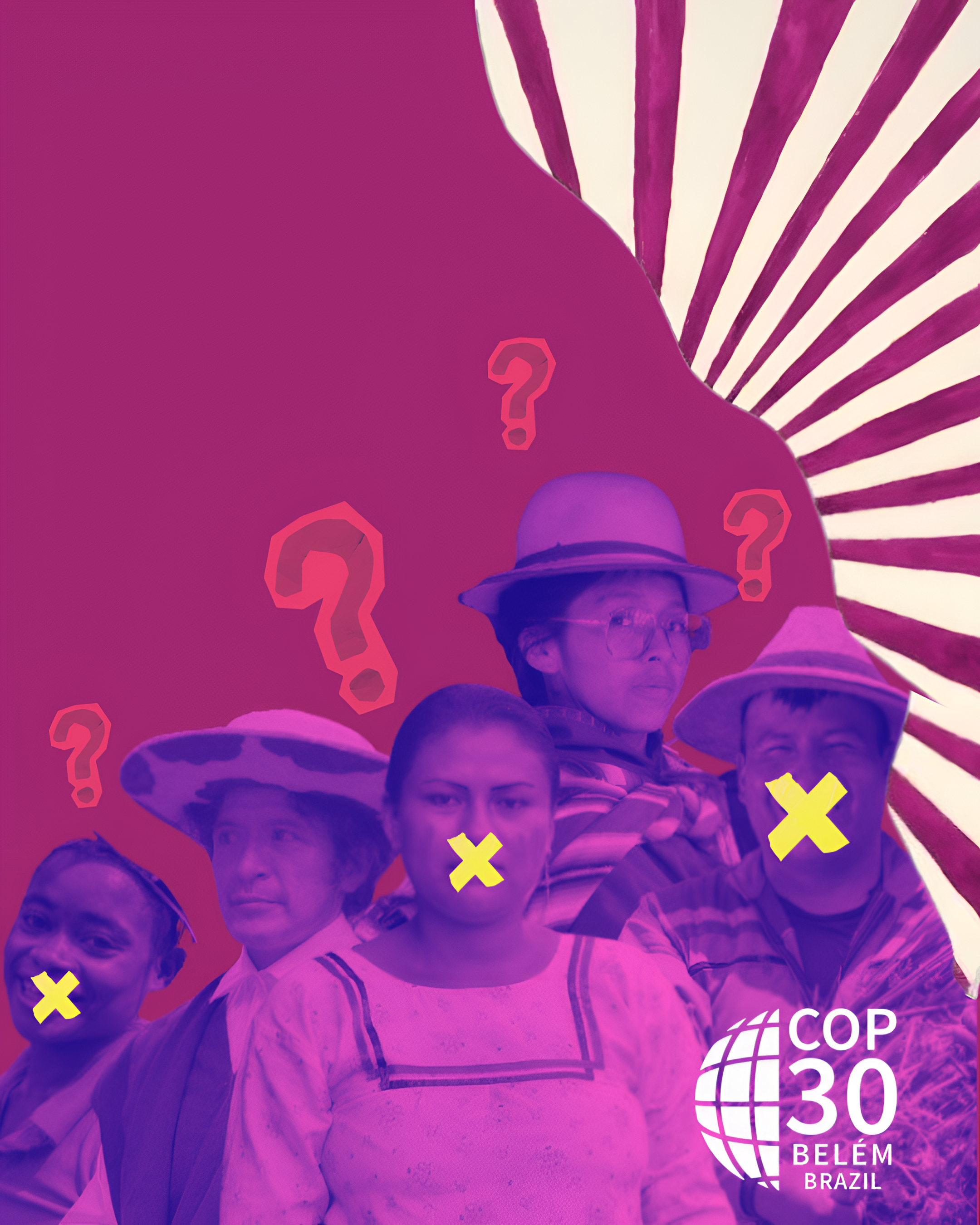
The 30th meeting of the Conference of the Parties (COP) to the UN Framework Convention on Climate Change (UNFCCC) officially concluded on Saturday, November 22, 2025, in Belém, Brazil. The COPs take place every year and are the world’s only multilateral decision-making forum on climate change, bringing together almost every country on Earth. This summit recognises global climate progress with business leaders, young people, climate scientists, Indigenous Peoples, and civil society sharing insights and best practices to strengthen global, collective and inclusive climate action.
Despite being held in the heart of the Amazon and branded as the most “people-centric” climate summit yet, COP30 ended without a single binding commitment to phase out fossil fuels, the primary cause of the climate crisis. For some time now, we have not only attributed most climate changes to fossil fuel extraction and consumption, but scientists have also established that there is no clearer alternative to slowing down the impending climate crisis other than phasing out fossil fuels. The failure of COP30 to address a transition away from fossil fuels was not due to a lack of information, but the absence of a political will to do so.
Around 80 developed and developing countries demanded explicit language for a phase-out of fossil fuels, along with a clear timeline and measurable commitments. Yet, resistance from major developing economies, such as India, China, Russia, Saudi Arabia, and South Africa, ensured that such commitments did not make it into the final agreement. They argued that energy transitions must be nationally determined, not externally imposed.
This stance is a result of their heavy reliance on fossil fuels to run their economies.
Saudi Arabia’s petroleum sector accounts for approximately 87% of the country’s budget revenues and 90% of its export earnings. Fossil fuels are Russia’s biggest single source of state income, powering its economy despite shifts in global markets and political pressures.
India remains heavily dependent on fossil fuels for nearly 90% of its primary energy, driven by massive demand from a growing economy and population. While in China, around 57% of primary energy comes from coal, driving its status as the world’s largest emitter. Similarly, South Africa derives 80% of its electricity from coal.
When economic survival is framed against climate responsibility, the latter is often pushed aside. In this context, climate negotiations shifted from being about collective survival to being about protecting national interests. Phasing out fossil fuels would take a toll on their economies, and profit margins would drastically decline. Thus, once again, global climate protection was undermined for the benefit of those corporations and governments that capitalise on climate-damaging practices.
The COP30 climate negligence is not just a result of major developing nations prioritising economic revenues over climate responsibility, but also an outcome of political powerplay. At its core, the discussions at COP30 reflect how global climate action continues to be shaped by those whose economic interests are tied to the fossil fuel economy.
Adding to the already disappointing outcome of this year’s conference was the absence of an official United States delegation for the first time in three decades. The US vacuum created space for emerging powers to consolidate influence and push agendas aligned with national economic interests. As a result, BRICS countries emerged as a decisive bloc and influenced the removal of fossil phase-out language, the insertion of flexibility for developing nations and greater focus on equity and economic justice.
During the conference, COP30 President André Corrêa do Lago volunteered to come up with 2 roadmaps: one on halting and reversing deforestation, and another on transitioning away from fossil fuels in a fair, orderly, and equitable manner. However, this initiative was on a volunteer basis and would take place outside the UN process.
The roadmap is expected to mobilise additional finance for forest conservation, cross-border cooperation to curb illegal logging, long-term strategies for restoring degraded landscapes and building support systems for forest and indigenous communities.
However, according to Brazilian civil society organisations, Lago’s proposal to introduce “roadmaps” closely resembles the approach taken after the failure of COP29 in Azerbaijan, which produced the Baku–Belém Roadmap for US$1.3 trillion. This roadmap, however, was not formally recognised or approved at COP30. This makes one question the effectiveness and binding value of such alternatives, given their unclear framework and low acceptance in climate negotiations
Having said that, the summit was not all bad. One hundred and ninety-five countries adopted the Belém Package- a set of 29 decisions that were agreed upon and finalised as a result of the summit. This included the agreement of the countries to triple adaptation finance by 2035. Adaptation finance is the funding given by developed countries to developing countries to cope with the impact of climate change. This initiative will help vulnerable countries to manage climate crises like drought, soaring heat levels, floods, etc.
Another major outcome was the adoption of a new Just Transition Mechanism to support workers and economies transitioning from fossil fuels to sustainable industries, ensuring that the transition is fair and protects the rights of all people, including workers, women and Indigenous people. The climate conference also finalised a comprehensive set of 59 voluntary, non-prescriptive indicators to track progress under the Global Goal on Adaptation.
These measures are undoubtedly inclusive of all economies, especially indigenous people and other vulnerable nations and address the need to curb climate change, but is that enough? After 30 meetings on climate change- analysing its source, its impact, one expects a concrete plan, if not immediate action and COP30 was a huge disappointment in this regard. It reflects how governments show little willingness to work on phasing out fossil fuels to foster capital gain and economic revenues. Global climate protection is being undermined by those in power, and they seem to be compensating for it by increasing adaptation funds to developing countries. It is like providing meagre protection in monetary terms, instead of ruling out the root cause of climate change. COP30 thus appeared primarily performative, marked by vague commitments and surface-level solutions and no concrete plan to phase out fossil fuels. This failure wasn’t a diplomatic oversight; it was a deliberate political choice shaped by power, profit, and global inequality.

The sentences possess an innate clarity, yet they never sacrifice depth. Each phrase invites consideration, encouraging the reader to linger and explore fully.