
Getting Away With It: The Legal Loopholes That Protect Indian Politicians
By Aadrita Nandi on December 14, 2025
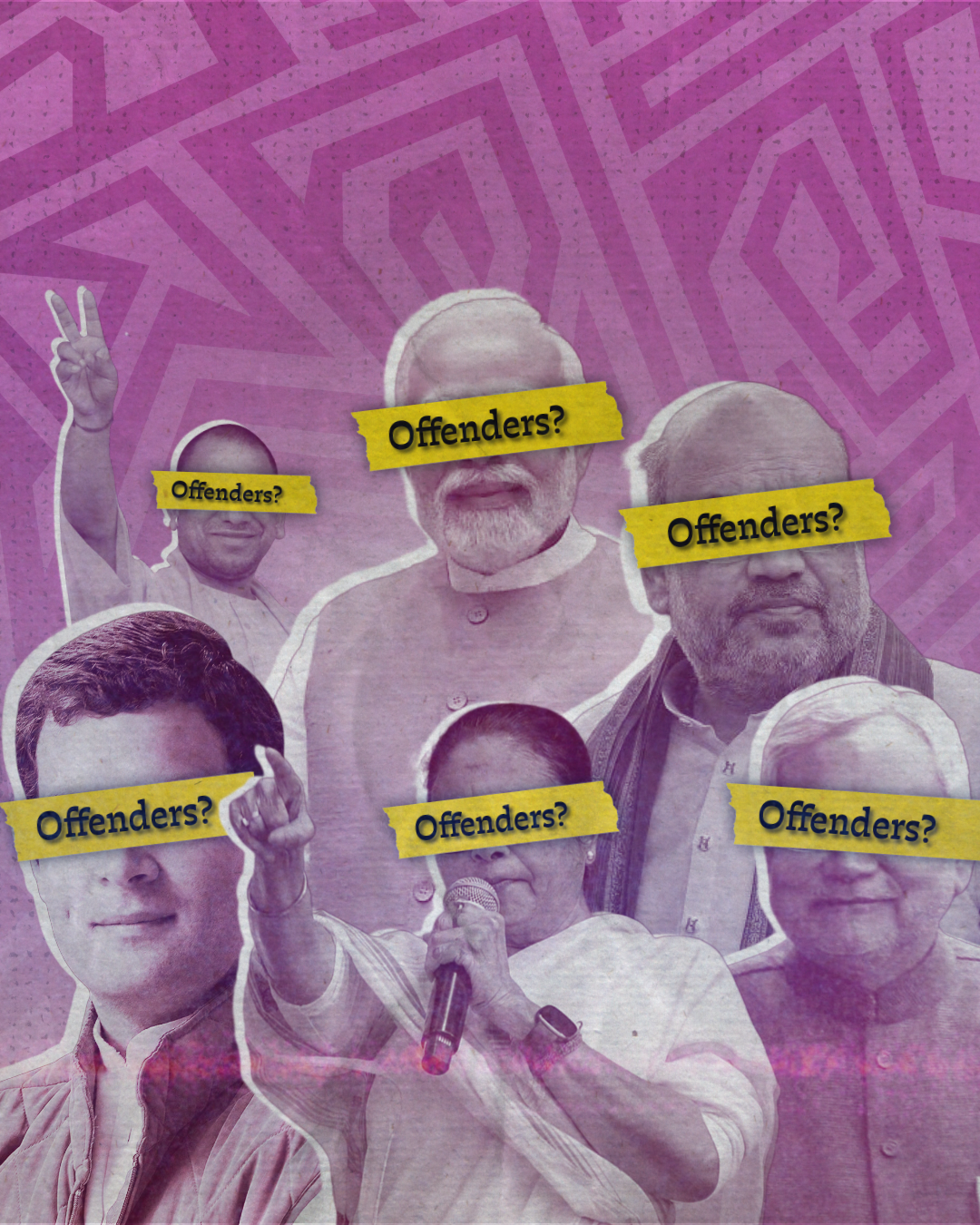
In India, political accountability doesn’t collapse because everyone in power is villainous or because responsible institutions don’t exist; rather, it falters in quieter, more technical ways. This article examines something far more ordinary and far more frustrating: why elected representatives in India can survive allegations, broken promises, or legal trouble that ordinary citizens simply cannot.
The idea for this article came from a dear friend of mine, who once asked: “Every election season I wonder, politicians sticking to their words seems so… alien these days, right? Like all of these campaigns and fake promises, where do they go? Don’t they get fined for lying through their teeth like this? Don’t they have any kind of consequences?” I most often forget or disregard such ‘opinions’ after a while, but tucked away in all my thoughts that night, I wondered: How do politicians keep getting away with things the rest of us would be sued, fired or jailed for?
So, I became resolute in trying to make sense of it, squash reality (and a bit of curiosity) into words. The truth is far less dramatic than people imagine. It isn’t sorcery or secret handshakes; it’s paperwork, procedural fine print, constitutional grey corners, roomy enough for entire scandals to breathe. Most of which you and I wouldn’t bother to read. Those quiet, technical details decide everything: who gets investigated, who gets delayed, and who simply slips through the cracks and walks away untouched.
And once you learn how these mechanisms actually work, you start to see politics differently. Not more cynically, just more clearly. Suddenly, every scandal, every statement, every conveniently timed resignation looks less like chaos and more like choreography. This piece is an attempt to decode that choreography; it does not aim to “expose” individuals or to point fingers, but to give you the cheat sheet to help you understand why accountability looks the way it does in this country. Because power isn’t mysterious; it just speaks a language most of us were never taught. So, let’s translate it.
Parliamentary Privilege
Think of this as the first rule of the game: what a legislator says inside Parliament or a state assembly cannot touch them legally. Article 105 for Parliament and Article 194 for state legislatures give MPs and MLAs the freedom to speak, vote, and even accuse, without fear of being sued or prosecuted. That includes statements that might be false, exaggerated, or even downright provocative, the kind of stuff that would have you and me explaining ourselves to someone in a uniform by the end of the week.
But this freedom isn’t a blank cheque. It works only as long as they stay within the internal rulebook of the House. This includes keeping in mind the Speaker’s directions, the code of conduct and the boundaries set by parliamentary procedure. The idea was to protect debate, to let lawmakers speak their minds without the constant threat of litigation, as it can leave legislators completely untouched, as long as they speak from the floor of Parliament. It’s almost like the words exist in a different world once they cross that threshold. Inside the House, there’s a legal bubble. Whereas on the outside? The rules are entirely different. Understanding this bubble helps make sense of debates that look chaotic or reckless but are, more often than not, almost entirely shielded by law.
The Defamation Paradox
To understand why politicians seem to glide past trouble the rest of us would trip over, you first need the basics. In India, defamation isn’t just a moral complaint, but a legal offence. If you say something about someone in a public setting that is either untrue or harmful to their reputation, the law will recognise two possible consequences: a civil case (where you pay for damages, i.e. reputation, name, etc.) or a criminal one (under IPC Sections 499 and 500), which can involve fines or even jail time. For most people, one reckless sentence is enough to send a legal notice to their doorstep.
Politicians, however, navigate a subtler terrain. Their statements are often cloaked in “public interest,” protected by parliamentary privilege, or embedded with narratives that give them legal backing. In practice, this means they are far less likely to face consequences for saying something that would be none less than an offence if anyone else said it.
Even when they’re speaking outside the House, the fact that they are public representatives often influences how their intent is interpreted. Courts tend to give elected officials a wider margin, recognising that political speech is messy, heated, and sometimes exaggerated by nature. A sentence that would instantly count as defamation if you or I posted it on Instagram suddenly becomes harder to pin down when a politician says it on a stage. To really file a defamation case, you have to prove not only that it was harmful, but that it wasn’t political commentary, or criticism, or part of a larger democratic conversation.
Transparency That Isn’t Always Transparent: RTI and Its Limits
It’s tempting to think that the Right to Information Act gives you a straight line to the truth. In reality, it’s more of a maze. RTI guarantees access to government-held information, but it also gives authorities wide discretion to withhold or redact files citing national security, confidentiality, or public interest. One department might share everything, another might hold back out of caution, protocol, or genuine concern about sensitive material.
As a result, investigations can hit dead ends. Emails vanish, memos are blacked out, files are “unavailable.” The rules of transparency exist on paper, but the institutions controlling the information decide what the public actually gets to see. This is not exactly a cover-up, but a maze, where the path isn’t deliberately hidden, just complicated enough that many people give up before reaching the end.
Accountability
Even when the rules are straightforward, the mechanism that enforces them rarely is. Investigations, committee hearings, ethics panels are meant to act as checks on lawmakers, yet they tend to move at a pace that feels almost sluggish. And there are reasons for that. Most of these bodies are either dependent on the very institutions they’re meant to scrutinise, or they require layers of approvals before taking even the smallest step forward.
A committee proceeding might need a reference from the Speaker. An ethics panel might wait for documentation from multiple departments. An inquiry may hinge on permissions from higher authorities or legal consultations that could take months. Many scandals that explode in the media die quietly in committees or courts, long after public attention has moved on. By the time any legal or disciplinary outcome arrives, politicians are often back in new positions, new roles, and public memory has shifted. In India, time is one of the most effective tools for avoiding accountability.
The Resignation Escape Hatch
And sometimes, politicians don’t even stick around for the ending; they resign, move seats, or get placed somewhere new. Not because the law asked them to, but because politics taught them how useful timing can be.
Stepping down can pause investigations, reset oversight, or blunt the momentum of public pressure. Once things settle, the same individuals often return to positions of influence, sometimes in new capacities or parties. Timing, strategic exits, and re-entry aren’t tricks; they are part of the choreography of survival in Indian politics. It is exactly how the game is played.
The Manifesto Myth
Now, like my friend, you too probably wondered why parties can promise anything in a manifesto and face no consequences if they fail? That’s because manifestos are not legally binding. Courts have repeatedly ruled that promises in election campaigns are aspirational, not enforceable contracts.
The Election Commission can caution, advise, or critique one’s promises, but it cannot compel parties to act on every one of them. In practice, this allows parties to campaign freely, often exaggerating promises, while legal accountability remains off the table. Promises may win votes, but laws don’t require delivery (unfortunately).
Takeaways
This cheat sheet does not reveal a grand conspiracy; it rather gives you a clue about the proceedings of a system that knows how to protect itself/ protect the people who work shielded by the system. The law doesn’t disappear around politicians, but it slows, softens, and rearranges itself. Through this arrangement, the law changes shape. Protections meant to protect speakers during debates become a shield. Procedures designed to prevent misuse become delayed. Transparency exists, but only as far as institutions are willing to carry it. None of this is accidental, and none of it is entirely sinister either; it’s the outcome of a system built to protect power while regulating it at the same time.
If accountability feels uneven, it’s because it is negotiated through rules most people never even see, let alone question. So our work as citizens (uncomfortable as it sounds) begins there. With reading structures instead of chasing scandals. With asks how authority is checked, who enforces those checks, and how long that enforcement typically takes. Tools like the RTI matter, but so does knowing their limits. Criticism matters too, especially when it’s aimed at systems, not at faces.
Understanding politics and their loopholes is a language in itself, and once you start reading that language, it leaves you with an understanding of what democracy is and what it can be. What we do with that understanding is where our responsibility as a democratic citizen actually begins.

Arjun Sehgal
Amazing insights, I wish politians start doing their real jobs instead of chasing power and votes.