Bihar in the Upside Down: Stranger Things Meets Bihar Elections
By Aadrita Nandi on December 3, 2025
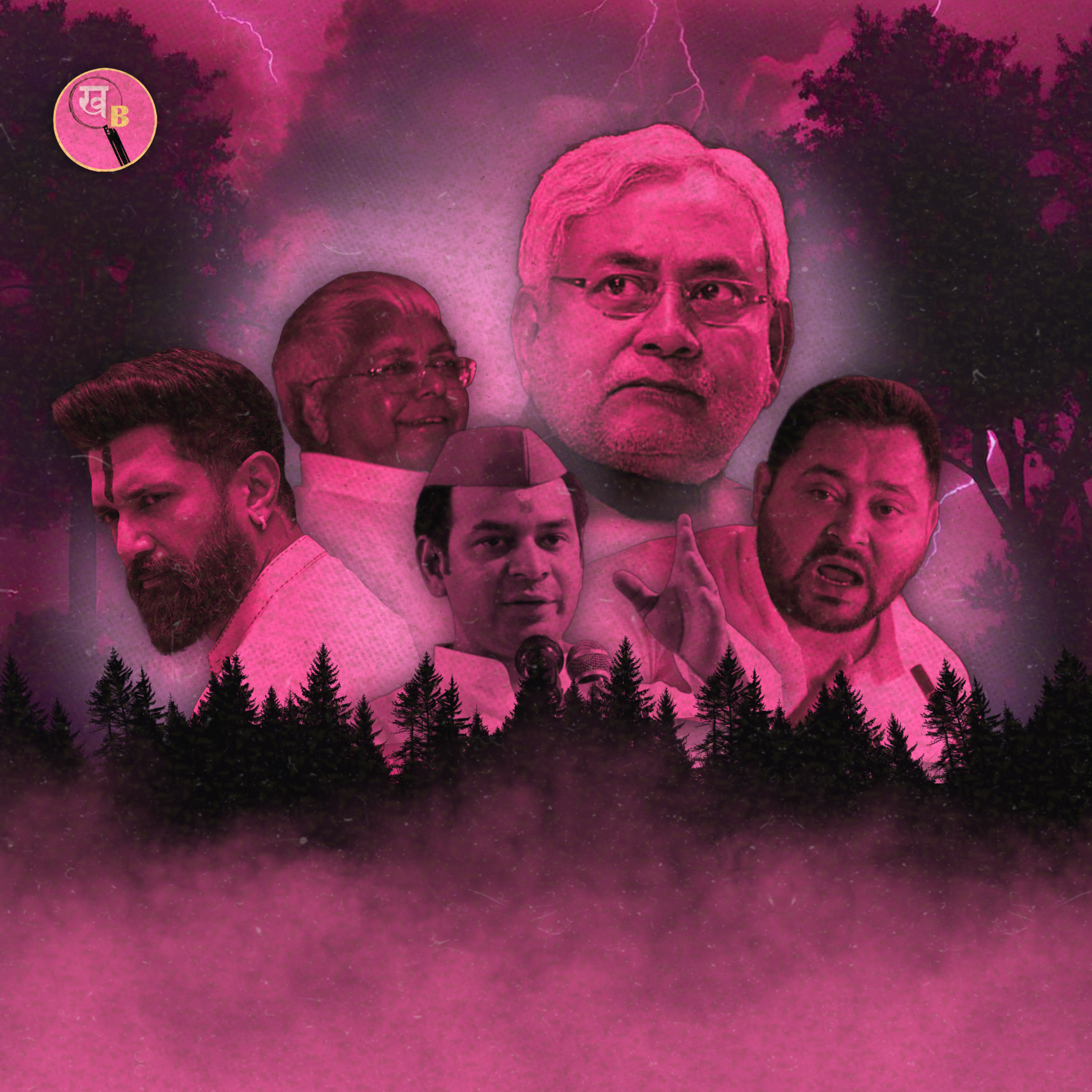
After the 2025 Bihar elections, Bihar’s political script returned to familiar characters, yet managed to rewrite key parts of the plot. With the NDA being re-elected with a landslide victory (202/243 seats) and the BJP emerging as the single largest party for the first time ever, this year’s elections felt less like a sequel to the previous year and more like a remix. Everyone say, “welcome back, Nitish Kumar!”
But, changes were made nonetheless, and what kind of journalists would we be if we didn’t acknowledge the good ones? Not everything is hopeless, not all the time. Thanks, Bihar, for that lesson.
Anyways, the Bihar elections may be over, but the state is still adjusting to its new-old political reality. And right when the post-election dust is settling, Stranger Things drops a new season, making it impossible not to draw comparisons between the Upside Down and Bihar’s political landscape. And honestly? Watch Indian politics long enough, and the Upside Down stops feeling like the strangest place in existence. This year’s political atmosphere is so electrically bizarre that it almost begs for a cultural parallel, and right on cue, Stranger Things returns with its fog, fear, and frantic energy. Suddenly, it doesn’t feel absurd to imagine the two worlds bleeding into each other. Not as a parody, or a mockery, but as a context that young people actually understand.
So, let’s step into Patna, the Hawkins of Bihar, its citizens, and the role they played in the 2025 elections.
Eleven: The Youth Vote With Superpowers They Haven’t Fully Realised Yet
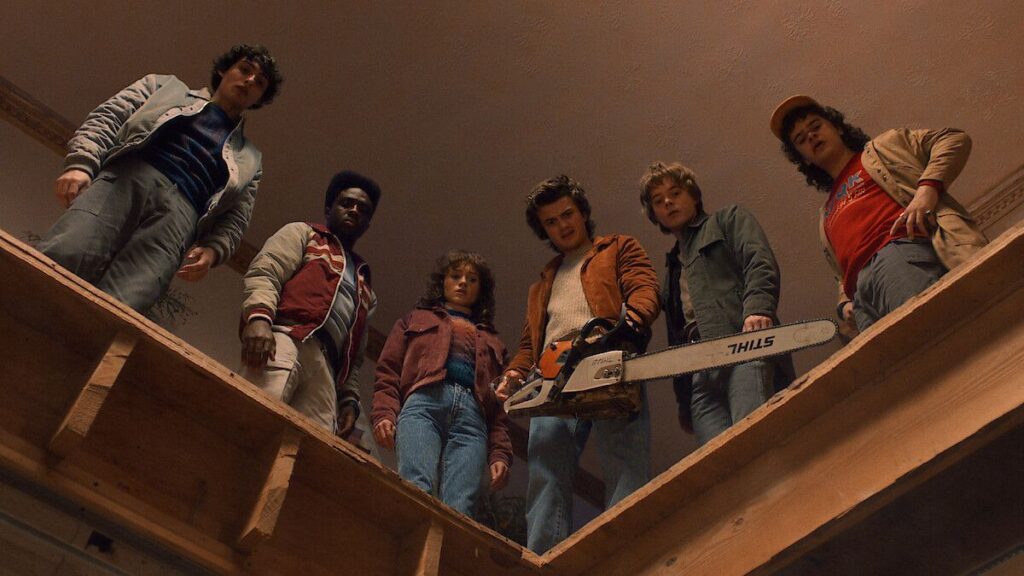
In Stranger Things, Eleven changes the storyline the moment she steps in. In Bihar’s 2025 election, the 18–25 bracket played a similar role, think of them not as a lone Eleven saving the day, but as a collective superpower with millions of small choices, frustrations, debates, and aspirations forming a pressure field strong enough to bend the political landscape.
This year, nearly 1.77 crore young voters were eligible, including about 14 lakh first-time voters. And for the first time in a long time, their choices formed a measurable pattern. According to Axis My India’s post-poll data, the Mahagathbandhan drew 46% of first-time voters and 44% of voters in their twenties, while the NDA held around 37% in both groups.
The issues driving this shift were basic but urgent: steady jobs within the state, reliable government exams and opportunities, and the chance to build a future without having to migrate to “more developed states.”
Years of paper leaks, delayed recruitments, and uneven opportunities meant young voters weren’t voting just to get their votes counted; rather, they were voting out of lived experience. And when they turned up, their voices and votes managed to tighten margins across several seats, enough for every alliance to reconsider how seriously they speak to the under-30 electorate.
Eleven doesn’t perform miracles; she just shows up at the right moment when time needs her, and this year, so did Bihar’s youth.
The Demogorgon: Misinformation, Bihar’s Seasonal Monster
Imagine a monster that doesn’t roar, but whispers into your ear just when you’re feeling vulnerable, tired, anxious, or scrolling late at night. That’s the kind of monster that manifested through misinformation during the 2025 election, especially among the youth and first-time voters.
Because across India, not just in Bihar, the digital world has become a breeding ground for fake news for many years. According to a 2024 survey by a digital-rights group, nearly 80% of first-time voters said they had encountered fake news on social media platforms, which indeed shaped their opinions in some way.
Platforms like WhatsApp, Instagram, and Facebook, the same ones that many young voters rely on like it’s bread and butter, turned into the Demogorgon’s lair. After analysing the “Don’t Be a Fool 3.0” survey, 29.8% of fake-news exposure came through WhatsApp, followed by 17.8% on Instagram and 15.8% on Facebook. As for what kind of stories spread through these channels? Fake updates about polling-station procedures, doctored visuals claiming public violence or caste-based threats, false “job alert” screenshots, and misleading caste-oriented propaganda—all aimed at confusing, intimidating, or rattling voters. In one study of rural WhatsApp groups, a large share of viral political messages was found to carry misinformation, targeting specific communities and undermining trust in real news sources.
For a state whose youth vote was finally showing direction and weight, misinformation became the monster that tried to pull them back into the shadows. When voters start doubting their own ballot, or the process, or even their privacy, the democratic architecture itself begins to wobble. What truly matters is how we curb this problem (well, in this case, fight the Demogorgon). And as long as a forwarded message feels more real than verified information, the Demogorgon remains undefeated.
Max: Women Voters AKA the Unexpected Twist in the Plot
Max has always been the character who refuses to be written out; bruised, stubborn, and defiant. She isn’t the one with superpowers, but often the one who quietly decides the direction the group takes.
For the first time since the state began recording gender-segmented turnout, women outpaced men; 71.6% to 69.8% and that small numerical gap matters a lot more than we think it does. It looks like a small gap, but in a tight election, those few percentage points changed outcomes.
And constituency after constituency felt the ripple; in some places, women’s turnout ran 10 to 20 percentage points ahead of men, flipping margins, tightening battles, and forcing parties to rewrite their assumptions overnight.
Women showed up because the issues affecting them are immediate and non-negotiable: whether their daughters can travel safely, whether jobs exist close to home, whether public spaces feel usable, and whether the state takes their time and labour seriously.
The way Max alters the course of an episode by quietly redirecting the narrative, women voters changed the direction of this election in ways that were impossible to ignore.
But then comes the wrinkle every analyst keeps circling back to: the BJP–NDA government deposited ₹10,000 into women’s accounts just months before voting; under a state-run livelihood scheme. This smells more like conveniently timed support and strategy more than anything else. And as long as we’re on the point of women-led voting ballots, let’s ask ourselves this: did this cash transfer quietly help the BJP–NDA become the largest party for the first time in Bihar’s electoral history?
Well, Regardless of interpretation, the transfer added another layer to the already complex reasons why women turned out strongly; not the single driver, but a political variable that cannot be ignored when analysing voting behaviour this cycle.
Will Byers: The Issues That Keep Going Missing
Will Byers is always the one who slips out of sight just when everyone needs him the most. Not forgotten, but somehow pushed to the edges of the plot until a crisis forces everyone to look for him. Bihar’s key issues behave the same way every election year.
Take jobs, for instance. Everyone name-drops “rozgaar,” but the data shows how deep the gap runs: Bihar’s unemployment rate for 15–29-year-olds has hovered between 17% and 19%, nearly double the national urban average. And that’s before you count the quieter crisis over 30 lakhs young Biharis migrating out of the state each year for work or study. A missing Will, multiplied by millions.
The same pattern is seen in Bihar’s healthcare.
The state still has one doctor for every 28,000 people, far from the WHO norm of 1:1,000. Most primary health centres operate with staff shortages that voters talk about all year, and politicians talk about only in passing.
And then come the caste dynamics, another Will Byers of Bihar politics; they are always present, always silently playing a huge role in shifting political narratives and overturning ballot counts when the time comes; yet their chokehold over Bihar’s political landscape are rarely confronted honestly.
Rather than confrontation, politicians tend to exploit casteist biases to their advantage.
BJP made significant gains among EBCs, carving into a segment that determines outcomes in dozens of rural constituencies. BJP also quietly aimed at Rashtriya Janata Dal (RJD)’s usual voters, by leveraging caste loyalties and strategically selecting and placing certain candidates of certain castes. Meanwhile, RJD held its traditional Yadav-Muslim belt, but the support stayed concentrated and did not see any significant growth this year.
All these dynamics; from jobs and healthcare to caste equations, are like Will standing right beside the group, quietly shaping the story while everyone else chases louder distractions. And just like in the show, the story doesn’t truly move forward until people stop chasing the noise and start paying attention to what (or who) has been missing all along.
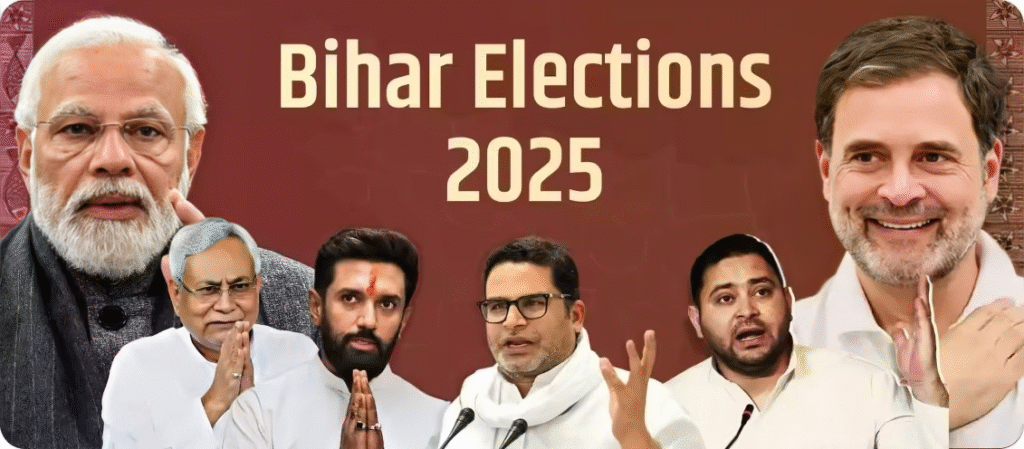
And when the polls finally closed on counting day, Bihar’s political world didn’t flip upside down (pun intended), it actually ended up rearranging itself in a way both familiar and newly sharpened. Nitish Kumar returned as Chief Minister, but the NDA emerged with a far stronger grip than before, shifting the balance of power even as the faces at the top remained the same. This time, Bihar’s voters proved that democracy works best when it’s lived, felt, and fought for. Until then, there are many more seasons to come and still many battles (and monsters) to fight.
Stranger Things works because every season forces its characters to confront the thing they’ve been avoiding, something that they know has been lurking beneath the shadows. The 2025 Bihar election wasn’t all that different. Youth turnout exposed what happens when a generation stops waiting for its future to be handed to them. Women voters showed how a long-steady presence can suddenly become the force that resets expectations. Misinformation reminded us that the biggest threats are often the ones that slip in quietly while everyone is distracted (Season 2 Demo-dogs, remember?) And the missing issues, the Will Byers of every election cycle, proved yet again that what we ignore could eventually decide the story anyway.